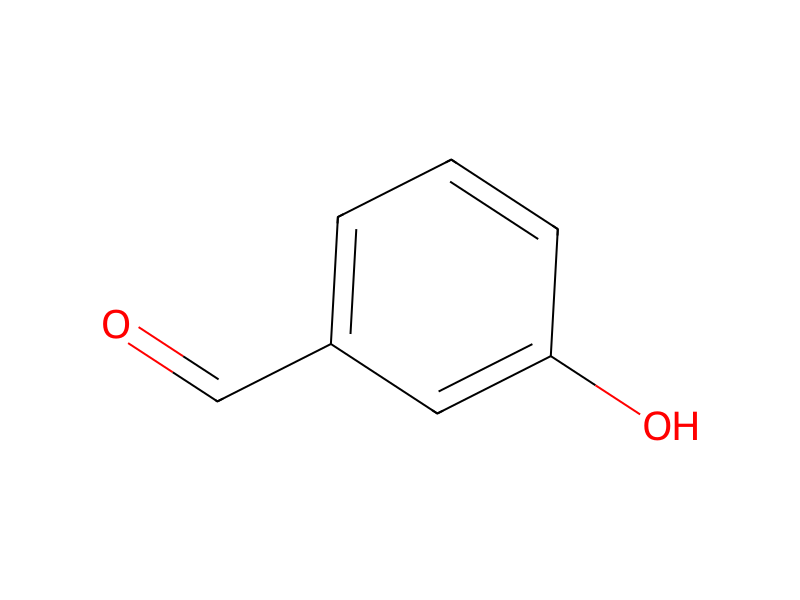
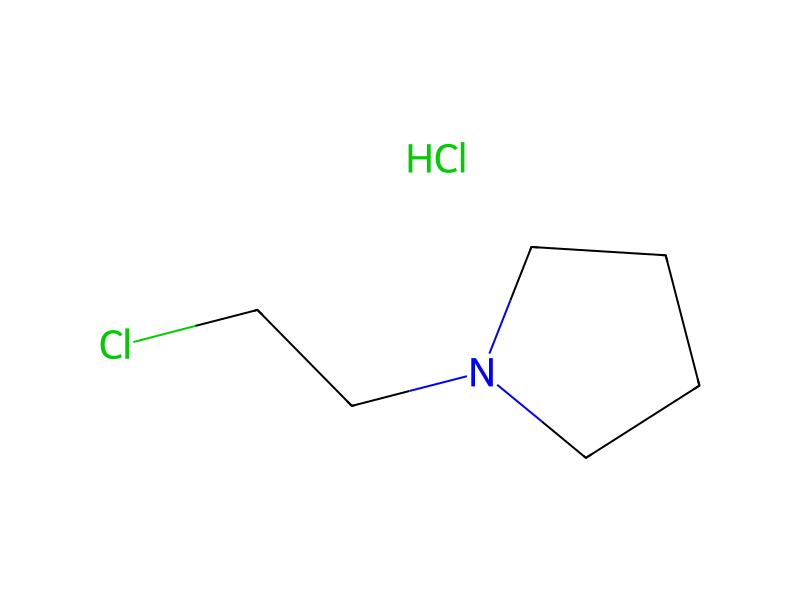
3-Hydroxybenzaldehyde → 3-(2-(1-Pyrrolidinyl)ethoxy)benzaldehyde
Reaction equation

[OH:1][C:2]1[CH:3]=[C:4]([CH:7]=[CH:8][CH:9]=1)[CH:5]=[O:6].[OH-].[K+].CS(C)=O.Cl.Cl[CH2:18][CH2:19][N:20]1[CH2:24][CH2:23][CH2:22][CH2:21]1>C(OCC)(=O)C.O>[N:20]1([CH2:19][CH2:18][O:1][C:2]2[CH:3]=[C:4]([CH:7]=[CH:8][CH:9]=2)[CH:5]=[O:6])[CH2:24][CH2:23][CH2:22][CH2:21]1Participants
7
Reactant 4


Product 1

Reagents, catalysts & solvents 2


Procedure
To a mixture of 3-hydroxybenzaldehyde (4.15 g, 33.98 mmol), KOH (4.93 g) and DMSO (50 ml) was added N-(2-chloroethyl)pyrrolidine hydrochloride (6.94 g). The reaction mixture was stirred at room temperature overnight, then was poured into water (750 ml) and ethyl acetate (350 ml) was added. The layers were separated, the aqueous layer was extracted with ethyl acetate and the combined organic layers were washed with water (2×1000 ml), dried over MgSO4, filtered and stripped to afford 7.12 g of 3-[2-(1-pyrrolidinyl)ethoxy]benzaldehyde.
Workup
- additionwas added
- customThe layers were separated
- extractionthe aqueous layer was extracted with ethyl acetate
- washthe combined organic layers were washed with water (2×1000 ml)
- dry with materialdried over MgSO4
- filtrationfiltered
Sources & evidence
- ORD record
- ord-be5253fa1c614660b4f6a176ccdef78f
- Source dataset
- uspto-grants-1999_09
- Patent number
- US05958929
Reaction notes
Loading…