3-Hydroxybenzaldehyde → HCID 21846078, compound
Reaction equation

[OH:1][C:2]1[CH:3]=[C:4]([CH:7]=[CH:8][CH:9]=1)[CH:5]=[O:6].C([O-])([O-])=O.[K+].[K+].Cl.[CH3:17][N:18]1[CH2:23][CH2:22][CH2:21][CH2:20][CH:19]1[CH2:24]Cl>CC#N>[CH3:17][N:18]1[CH2:24][CH2:19][CH2:20][CH2:21][CH:22]([O:1][C:2]2[CH:3]=[C:4]([CH:7]=[CH:8][CH:9]=2)[CH:5]=[O:6])[CH2:23]1Participants
5
Reactant 3
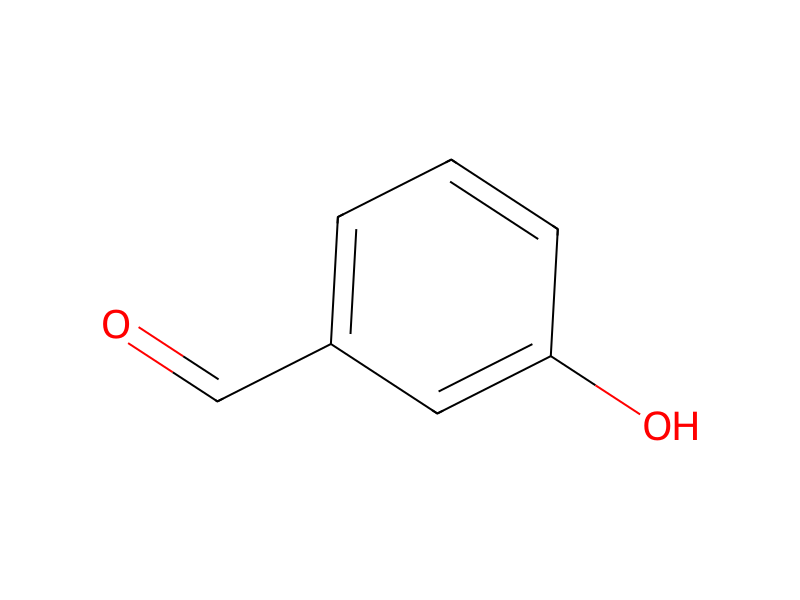


Product 1

Reagents, catalysts & solvents 1

Procedure
A mixture of 3-hydroxybenzaldehyde (3.66 g, 0.03 mol), K2CO3 (12.43 g, 0.09 mol), and CH3CN (100 ml) was stirred at room temperature for 1/2 hour, then N-methyl-2-chloromethylpiperidine hydrochloride (5.49 g, 0.03 mol) was added. The reaction mixture was stirred until the reaction was complete, then the solvent was removed in vacuo and the residue was partitioned between CHCl3 and water. The aqueous layer was extracted with CHCl3 (3×100 ml) and the combined organic layers were concentrated in vacuo to afford 3-(1-methyl-3-hexahydroazepinyloxy)benzaldehyde.
Workup
- stirringThe reaction mixture was stirred until the reaction
- customthe solvent was removed in vacuo
- customthe residue was partitioned between CHCl3 and water
- extractionThe aqueous layer was extracted with CHCl3 (3×100 ml)
- concentrationthe combined organic layers were concentrated in vacuo
Sources & evidence
- ORD record
- ord-01ad383acdb1463d8d18e12d41747ecc
- Source dataset
- uspto-grants-1999_09
- Patent number
- US05958929
Reaction notes
Loading…