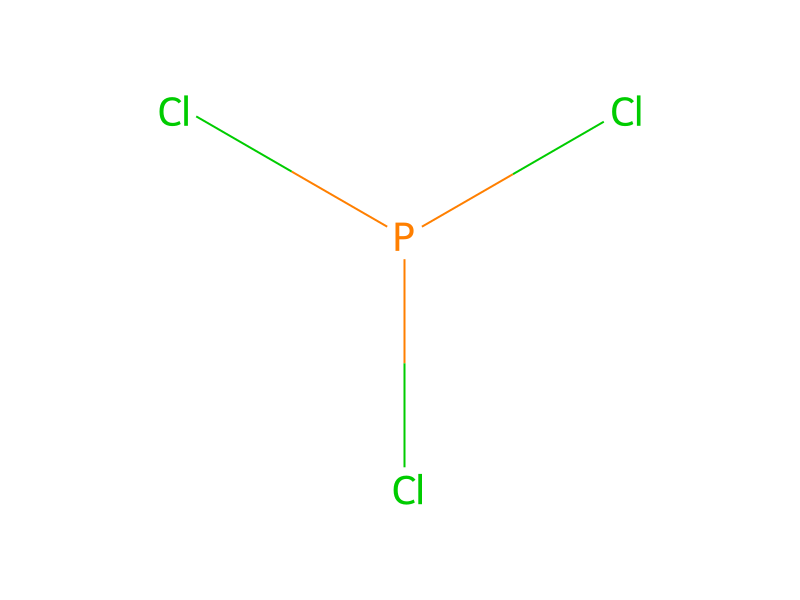
Phosphorus trichloride → Diethyl 5-nitropyridine-2,3-dicarboxylate
Reaction equation

P(Cl)(Cl)Cl.[N+:5]([C:8]1[CH:9]=[C:10]([C:20]([O:22][CH2:23][CH3:24])=[O:21])[C:11]([C:15]([O:17][CH2:18][CH3:19])=[O:16])=[N+:12]([O-])[CH:13]=1)([O-:7])=[O:6]>ClCCCl>[N+:5]([C:8]1[CH:9]=[C:10]([C:20]([O:22][CH2:23][CH3:24])=[O:21])[C:11]([C:15]([O:17][CH2:18][CH3:19])=[O:16])=[N:12][CH:13]=1)([O-:7])=[O:6]Participants
Reactant 2

Product 1

Reagents, catalysts & solvents 1

Conditions
- Temperature
- 25 °C
Procedure
88.8 g (0.648 mol) of phosphorus trichloride were added in the course of 30 minutes while stirring at 25° C. to a mixture of 92 g (0.324 mol) of the above N-oxide and 300 ml of 1,2-dichloroethane. After stirring at 25° C. for 12 hours, the reaction mixture was concentrated in vacuo, the residue was taken up again in methylene chloride and the solution was poured into 2.5 l of ice-water. After phase separation, the aqueous phase was extracted with methylene chloride. The organic extract was washed with water, saturated sodium hydrogencarbonate and sodium chloride solution, dried over magnesium sulfate and filtered off with suction through neutral alumina and silica gel. After concentrating, 58.2 g (67% of theory) of the title compound were obtained as a yellowish syrup.
Workup
- concentrationthe reaction mixture was concentrated in vacuo
- additionthe solution was poured into 2.5 l of ice-water
- customAfter phase separation
- extractionthe aqueous phase was extracted with methylene chloride
- extractionThe organic extract
- washwas washed with water, saturated sodium hydrogencarbonate and sodium chloride solution
- dry with materialdried over magnesium sulfate
- filtrationfiltered off with suction through neutral alumina and silica gel
- concentrationAfter concentrating
Sources & evidence
- ORD record
- ord-5831d35a20ae4652a4cf4119e6f15321
- Source dataset
- uspto-grants-1999_09
- Patent number
- US05959116
Reaction notes
Loading…