Hexafluoroacetone → 2-(5-Bromopyridin-3-yl)-1,1,1,3,3,3-hexafluoropropan-2-ol
Reaction equation

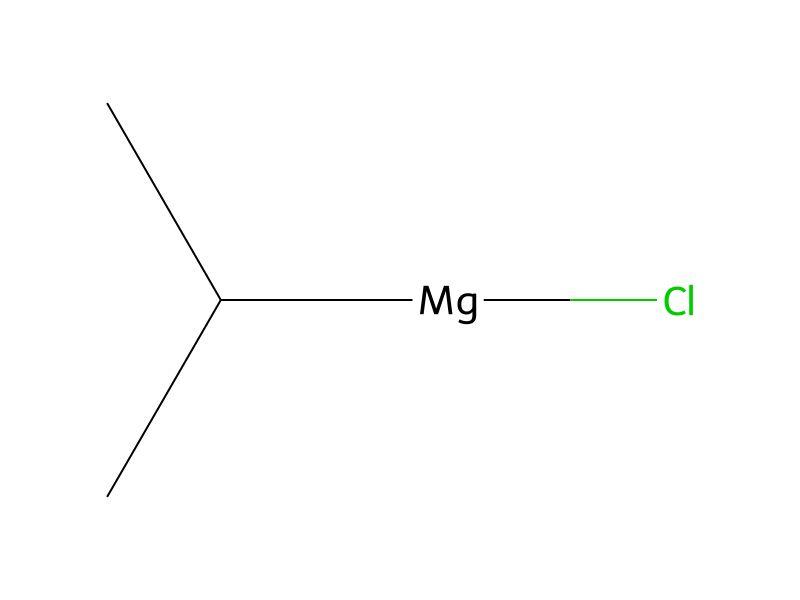
Br[C:2]1[CH:3]=[N:4][CH:5]=[C:6]([Br:8])[CH:7]=1.C([Mg]Cl)(C)C.[F:14][C:15]([F:23])([F:22])[C:16]([C:18]([F:21])([F:20])[F:19])=[O:17]>C1COCC1>[Br:8][C:6]1[CH:7]=[C:2]([C:16]([OH:17])([C:18]([F:21])([F:20])[F:19])[C:15]([F:23])([F:22])[F:14])[CH:3]=[N:4][CH:5]=1Participants
Reactant 3


Product 1

Reagents, catalysts & solvents 1

Procedure
To a stirred solution of 3,5-dibromo pyridine 257 (1.09 g, 4.60 mmol) in dry THF cooled to 0° C., was added isopropyl magnesium chloride (2.4 mL, 4.8 mmol) drop wise while stirring for 10 min. Hexafluoroacetone (CF3—CO—CF3) 244 was added to the resulting reaction and continued stirring for another 2 h. After completion of the starting materials, the reaction was quenched with saturated ammonium chloride solution. The organic layer was separated and aqueous phase was extracted again with diethyl ether, the combined organic layer was dried over sodium sulphate and concentrated to get the crude 2-(5-bromopyridin-3-yl)-1,1,1,3,3,3-hexafluoropropan-2-ol 258. The crude was purified through silica gel by using 100-200 mesh silica gel by eluting the compound at 20:5 ethyl acetate in hexane as thick oil of compound 258.
Workup
- stirringcontinued stirring for another 2 h
- customAfter completion of the starting materials, the reaction was quenched with saturated ammonium chloride solution
- customThe organic layer was separated
- extractionaqueous phase was extracted again with diethyl ether
- dry with materialthe combined organic layer was dried over sodium sulphate
- concentrationconcentrated
Sources & evidence
- ORD record
- ord-de549faf83f9467ea4dc00b39b5f40c3
- Source dataset
- uspto-grants-2016_09
- Patent number
- US09446047B2
Reaction notes
Loading…