Hydrogen Peroxide → HCID 86698945, compound
Reaction equation

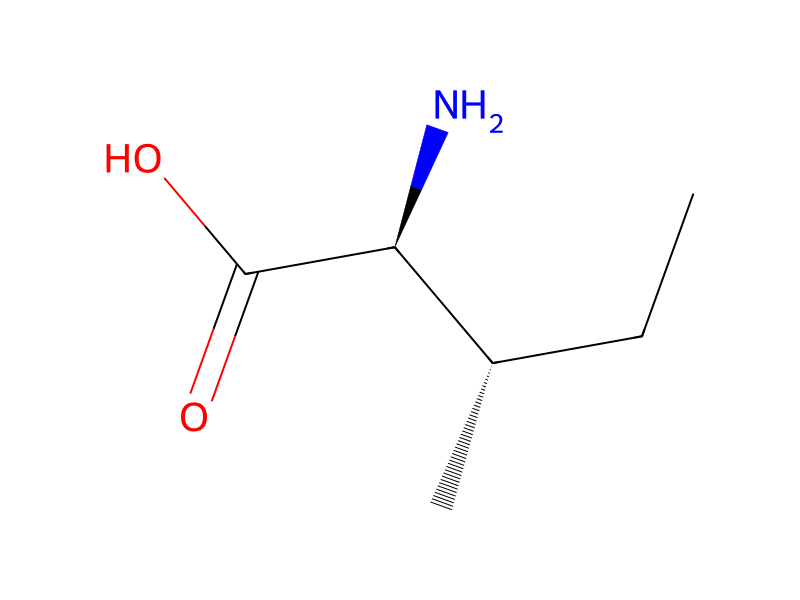
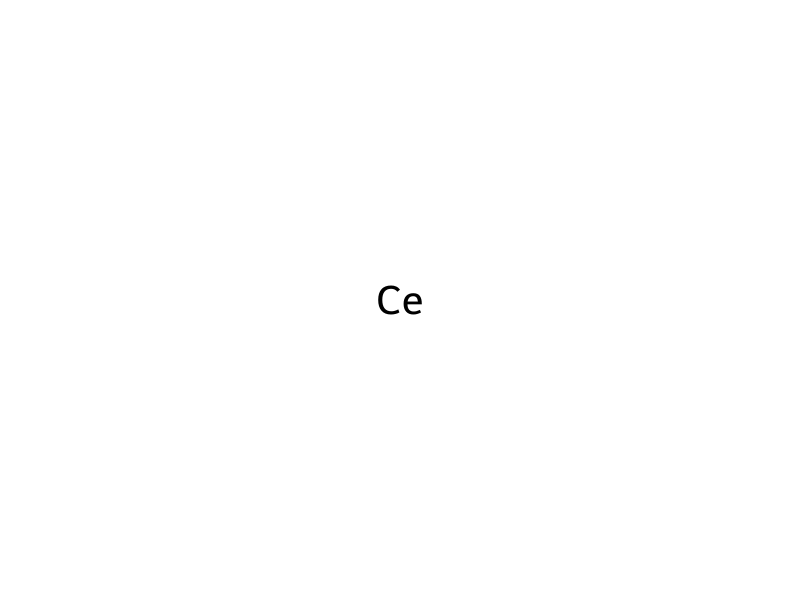
OO.[Ce:3].[NH2:4][C@H:5]([C:10]([OH:12])=[O:11])[C@H:6]([CH2:8][CH3:9])[CH3:7].[N+]([O-])(O)=O>>[NH2:4][C@H:5]([C:10]([OH:12])=[O:11])[C@H:6]([CH2:8][CH3:9])[CH3:7].[Ce:3]Participants



Conditions
- Temperature
- 40 °C
Procedure
Into a 600 ml glass beaker containing a magnetic stir bar was introduced 500 ml of high purity (HP) water. A 1.233 gm quantity of L-Isoleucine was dissolved in this volume. A 5.0 gm quantity of Ce(NO3)3·6(H2O) was added, thereby forming a molar ratio of L-Isoleucine to cerium ion of 0.8. Then a 10 ml solution containing 1.2 gm of 50% H2O2 (1.5 molar ratio of H2O2 to cerium ion) was added slowly to the cerium and isoleucine solution mixture. The pH was further adjusted to about 2.9 by the addition of 1N HNO3. The reaction product was then heated to 40° C. for 1 hour. The product dispersion was a clear yellow liquid that displayed a high degree of Tyndall scattering when illuminated with a low intensity LASER beam, indicating it contained well-dispersed colloidal particles. Particle size analysis of the TEM image shown in FIG. 10 indicated a particle diameter distribution of about 2-5 nm.
Workup
- customilluminated with a low intensity LASER beam
- additioncontained well-dispersed colloidal particles
Sources & evidence
- ORD record
- ord-97cce07970f548e38d84ed2835116974
- Source dataset
- uspto-grants-2016_04
- Patent number
- US09308265B2
Reaction notes
Loading…