Sodium Bicarbonate → 3-(Benzyloxy)-5-bromo-1-(difluoromethyl)pyridin-2(1H)-one
Reaction equation

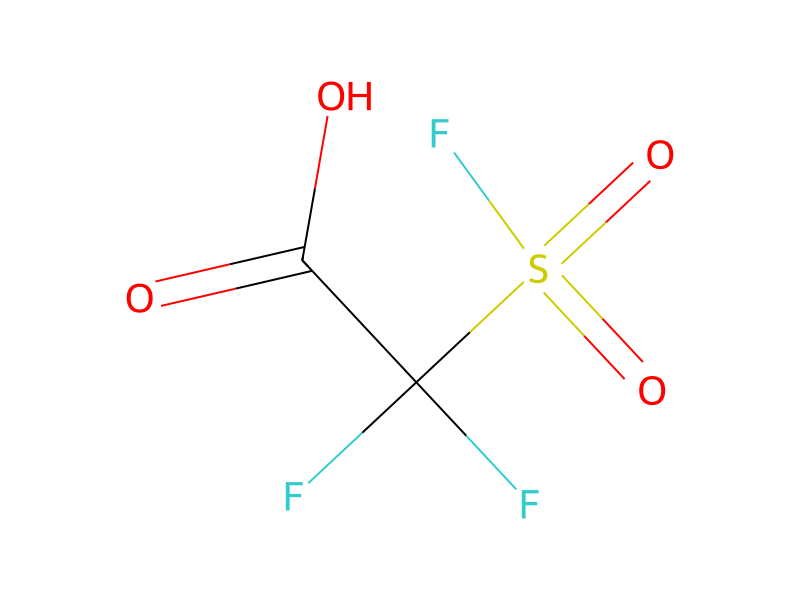
[CH2:1]([O:8][C:9]1[C:10](Cl)=[N:11][CH:12]=[C:13]([Br:15])[CH:14]=1)[C:2]1[CH:7]=[CH:6][CH:5]=[CH:4][CH:3]=1.FS([C:21]([F:26])([F:25])C(O)=O)(=O)=O.C([O-])(O)=[O:28].[Na+]>CC#N.CCOC(C)=O>[CH2:1]([O:8][C:9]1[C:10](=[O:28])[N:11]([CH:21]([F:26])[F:25])[CH:12]=[C:13]([Br:15])[CH:14]=1)[C:2]1[CH:7]=[CH:6][CH:5]=[CH:4][CH:3]=1Participants
6
Reactant 3


Product 1

Reagents, catalysts & solvents 2


Conditions
- Temperature
- 50 °C
Procedure
3-(Benzyloxy)-5-bromo-2-chloropyridine (100 mg, 0.335 mmol), 2-(fluorosulfonyl)difluoroacetic acid (179 mg, 1.005 mmol), and NaHCO3 (30 mg, 0.357 mmol) were combined in CH3CN (2 mL) then heated to 50° C. After heating overnight the mixture was cooled to RT and diluted with EtOAc. The resulting mixture was filtered through a pad of Celite® and concentrated. Flash column (Biotage-SNAP-10 g, 0-10% EtOAc/hexanes) gave the title compound (38 mg, 34%) as a white solid. 1H NMR (500 MHz, CDCl3): δ 7.69 (t, J=60.06 Hz, 1 H); 7.42-7.35 (m, 5 H); 7.22 (d, J=2.2 Hz, 1 H); 6.68 (d, J=2.3 Hz, 1 H); 5.10 (s, 2 H).
Workup
- temperatureAfter heating overnight the mixture
- temperaturewas cooled to RT
- filtrationThe resulting mixture was filtered through a pad of Celite®
- concentrationconcentrated
Sources & evidence
- ORD record
- ord-60031fd82e1644efb840e15d00246b77
- Source dataset
- uspto-grants-2016_04
- Patent number
- US09309199B2
Reaction notes
Loading…