Hydrochloric Acid → 2-Bromo-6-iodopyridin-3-ol
Reaction equation

[Br:1][C:2]1[C:7]([OH:8])=[CH:6][CH:5]=[CH:4][N:3]=1.C(=O)([O-])[O-].[K+].[K+].[I:15]I.Cl>O>[Br:1][C:2]1[C:7]([OH:8])=[CH:6][CH:5]=[C:4]([I:15])[N:3]=1Participants
6
Reactant 4



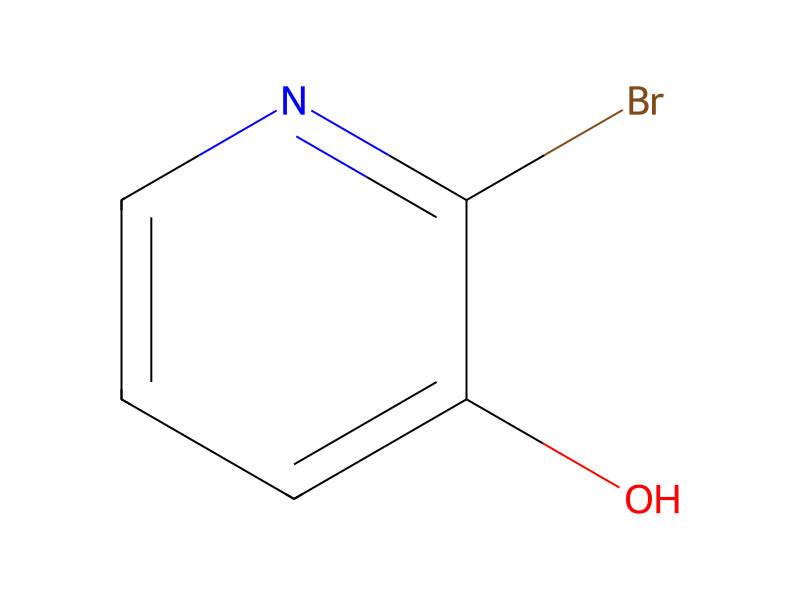
Product 1

Reagents, catalysts & solvents 1

Conditions
- Temperature
- 0 °C
Procedure
To a suspension of 2-bromopyridin-3-ol (24.1 g, 139 mmol) in 346 mL water was added potassium carbonate (38.3 g, 277 mmol), then iodine (38.7 g, 152 mmol), and this mixture was stirred at room temperature overnight. After cooling to 0° C., 2 N aqueous hydrochloric acid was added until evolution of gas ceased. Acidification was carefully continued until the pH reached ˜6, causing a precipitate to form. This precipitate was collected by filtration, washed with water and dried in a vacuum desiccator until reaching constant mass to afford 2-bromo-6-iodopyridin-3-ol (33 g, 79% yield). ES-MS (M+H)+=300.
Workup
- customto form
- filtrationThis precipitate was collected by filtration
- washwashed with water
- customdried in a vacuum desiccator
Sources & evidence
- ORD record
- ord-0a31cefd4b534d42a896438f809e635b
- Source dataset
- uspto-grants-2016_04
- Patent number
- US09309199B2
Reaction notes
Loading…