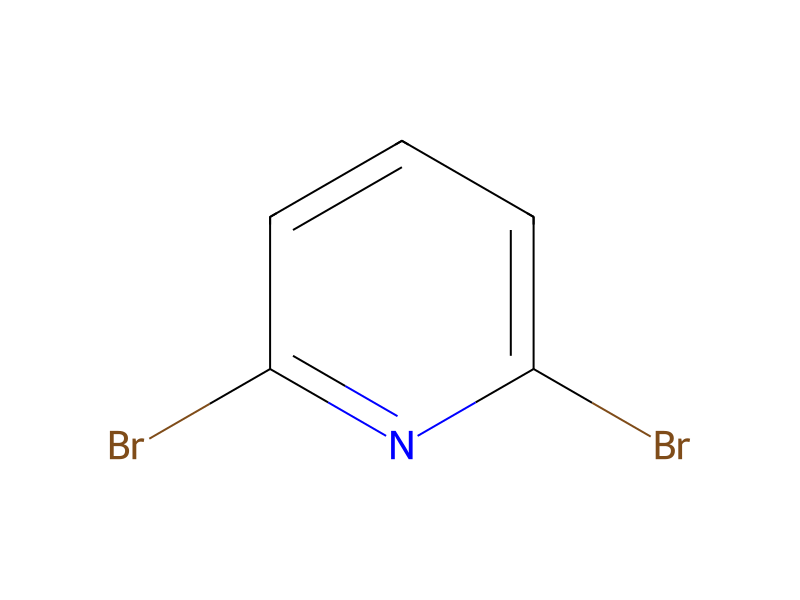
2,6-Dibromopyridine → 2-Bromo-6-(tributylstannyl)pyridine
Reaction equation

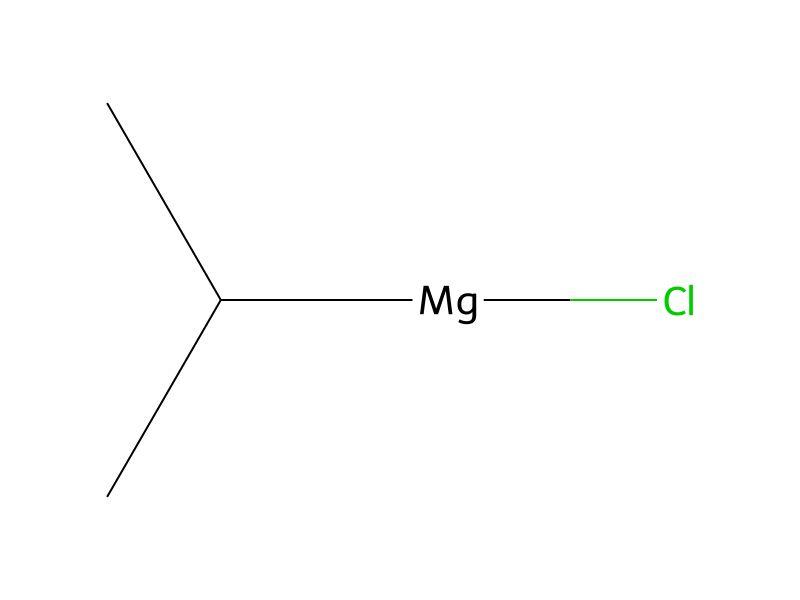
Br[C:2]1[CH:7]=[CH:6][CH:5]=[C:4]([Br:8])[N:3]=1.C([Mg]Cl)(C)C.[CH2:14]([Sn:18](Cl)([CH2:23][CH2:24][CH2:25][CH3:26])[CH2:19][CH2:20][CH2:21][CH3:22])[CH2:15][CH2:16][CH3:17]>C1COCC1>[Br:8][C:4]1[CH:5]=[CH:6][CH:7]=[C:2]([Sn:18]([CH2:19][CH2:20][CH2:21][CH3:22])([CH2:23][CH2:24][CH2:25][CH3:26])[CH2:14][CH2:15][CH2:16][CH3:17])[N:3]=1Participants
Reactant 3

Product 1

Reagents, catalysts & solvents 1

Procedure
To a solution of 2.6-dibromopyridine (5.0 g, 21.1 mmol) in dry THF (50 ml) at 0° C. was added iso-propyl magnesium chloride (11.6 ml, 23.21 mmol) dropwise for 20 min. The reaction was stirred at RT for 2 h, then cooled to 0° C. Tri-butyl tin chloride (7.55 g, 23.21 mmol) was added dropwise in 15 min. The mixture was stirred at RT for 12 h. The reaction was quenched with 10% NH4Cl solution and was extracted with EtOAc. The combined organic layers were washed with brine, dried, and concentrated. The residue was purified with silica gel chromatography to give 2-bromo-6-(tributylstannyl)pyridine (3.7 g, 40.3%). MS (ESI, pos. ion) m/z: 448 (M+1); 1H-NMR (CDCl3, 300 MHz) δ 7.3-7.5 (3H, m), 1.5-1.7 (6H, m), 1.3-1.4 (6H, m), 1.1-1.25 (6H, q), 0.7-0.9 (9H, q).
Workup
- temperaturecooled to 0° C
- stirringThe mixture was stirred at RT for 12 h
- customThe reaction was quenched with 10% NH4Cl solution
- extractionwas extracted with EtOAc
- washThe combined organic layers were washed with brine
- customdried
- concentrationconcentrated
- customThe residue was purified with silica gel chromatography
Sources & evidence
- ORD record
- ord-2a0e71cc304843ad86a5e8000f2c8dc1
- Source dataset
- uspto-grants-2016_04
- Patent number
- US09321756B2
Reaction notes
Loading…