Hydrochloric Acid → HCID 18511133, compound
Reaction equation

[CH3:1][C:2]1[NH:7][C:6]2=[CH:8][C:9]([C:11]3[CH:16]=[CH:15][CH:14]=[CH:13][CH:12]=3)=[N:10][C:5]2=[C:4]([NH2:17])[N:3]=1.[Cl:18][CH:19]([CH:23]1[O:27][CH2:26][CH2:25][O:24]1)[CH2:20][CH2:21][CH3:22].N(CC)(C(C)C)C(C)C.Cl>C1(C)C=CC=CC=1.CN(C=O)C.C(Cl)Cl.CCOC(C)=O>[ClH:18].[O:24]1[CH2:25][CH2:26][O:27][CH:23]1[CH2:19][CH2:20][CH2:21][CH2:22][N:10]1[C:5]2[C:4]([NH2:17])=[N:3][C:2]([CH3:1])=[N:7][C:6]=2[CH:8]=[C:9]1[C:11]1[CH:16]=[CH:15][CH:14]=[CH:13][CH:12]=1Participants
Reactant 4




Product 1

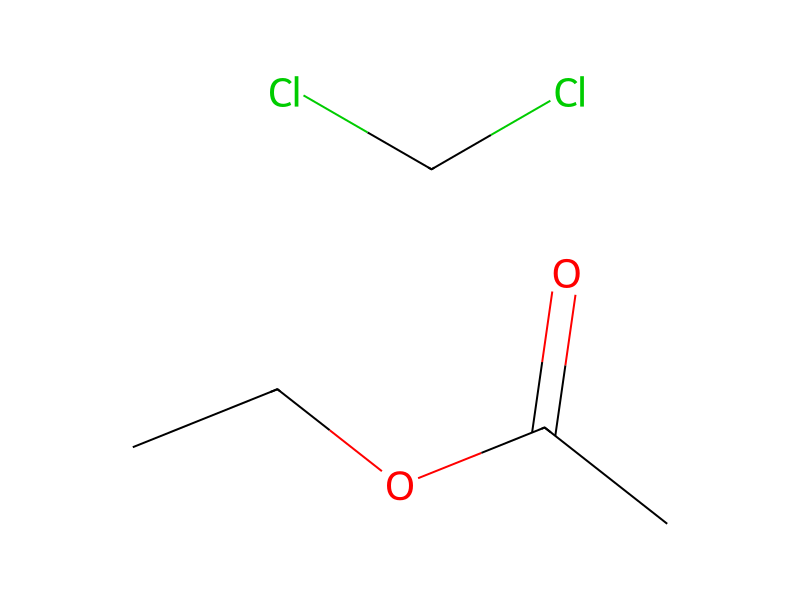
Reagents, catalysts & solvents 2

Procedure
A solution of 2-methyl-4-amino-6-phenylpyrrolo[3,2-d]pyrimidine (Example 22) (0.079 g, 0.35 mmol), 2-(1-chlorobutyl)-1,3-dioxolane (Fluka Chemika) (0.14 g, 0.85 mmol), and iso-Pr2NEt (0.3 mL, 1.7 mmol) in toluene/DMF (2.5:1.0 mL) was heated at reflux for 6 days. The mixture was allowed to cool to room temperature and purified by flash chromatography on silica gel with 5% NH3 (2N in MeOH) 5% MeOH in CH2Cl2 to afford the product. The product was dissolved in CH2Cl2/EtOAc (1:1) and the solution was treated with a 2 M ethereal HCl (2 mL). The resulting slurry was filtered, and the solid was washed with hot EtOAc (3×) to give a yellow solid (29 mg, 23%). 1H NMR (DMSO-d6; 400 MHz): d 1.53 (m, 2), 1.64 (m, 2), 1.84 (m, 2), 2.68 (s, 3), 3.86 (m, 2), 4.32 (br t, 2), 4.80 (t, 1), 7.34 (s, 1), 7.48-7.58 (m, 3), 8.11 (d, 2), 8.89 (s, 1), 9.17 (s, 1), 13.90 (s, 1). MS m/z: 353 (M+1). Anal. Calcd for C20H24N4O2.2HCl: C, 56.47; H, 6.16; N, 13.18. Found: C, 56.36; H, 6.08; N, 13.21.
Workup
- temperatureat reflux for 6 days
- custompurified by flash chromatography on silica gel with 5% NH3 (2N in MeOH) 5% MeOH in CH2Cl2
- customto afford the product
- filtrationThe resulting slurry was filtered
- washthe solid was washed with hot EtOAc (3×)
Sources & evidence
- ORD record
- ord-3201d24018544813b3b7169aa5bb64a8
- Source dataset
- uspto-grants-2001_02
- Patent number
- US06187777B1
Reaction notes
Loading…