Hydrochloric Acid → 3-Acetyl-4-hydroxybenzoic acid
Reaction equation

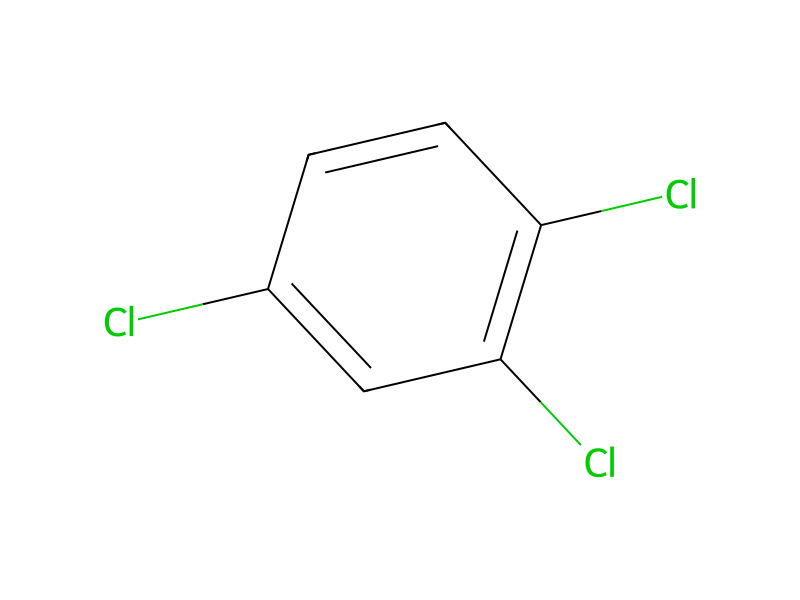
[Al+3].[Cl-].[Cl-].[Cl-].C([O:8][C:9]1[CH:17]=[CH:16][C:12]([C:13]([OH:15])=[O:14])=[CH:11][CH:10]=1)(=O)C.[C:18](Cl)(=[O:20])[CH3:19].Cl>ClC1C=CC(Cl)=CC=1Cl>[C:18]([C:17]1[CH:16]=[C:12]([CH:11]=[CH:10][C:9]=1[OH:8])[C:13]([OH:15])=[O:14])(=[O:20])[CH3:19]Participants
Reactant 4




Product 1

Reagents, catalysts & solvents 1
Conditions
- Temperature
- 135 °C
Procedure
36.6 g (0.274 mol) of AlCl3 are suspended in 50 ml of 1,2,4-trichloro-benzene and treated with 9 g (50 mmol) of 4-acetoxybenzoic acid. After dropwise addition of 7.84 g (0.1 mol) of acetyl chloride, the reaction mixture is heated to 130-140° C., the evolution of HCl gas occurring from approximately 60° C. The mixture is stirred for approximately 1 hour at 130° C. and then allowed to cool to 60-70° C., and the mixture is poured cautiously into stirred ice water. It is extracted several times with ethyl acetate, then the combined organic phases are extracted with saturated aqueous sodium bicarbonate solution and the combined aqueous phases are adjusted carefully to pH<1 using concentrated HCl, the 3-acetyl-4-hydroxybenzoic acid separating as sparingly soluble material.
Workup
- customoccurring from approximately 60° C
- temperatureto cool to 60-70° C.
- additionthe mixture is poured cautiously
- extractionIt is extracted several times with ethyl acetate
- extractionthe combined organic phases are extracted with saturated aqueous sodium bicarbonate solution
Sources & evidence
- ORD record
- ord-32b4594bab174a5b8714095c22992b82
- Source dataset
- uspto-grants-2001_02
- Patent number
- US06191164B1
Reaction notes
Loading…