Trifluoroacetic acid → HCID 86614841, compound
Reaction equation

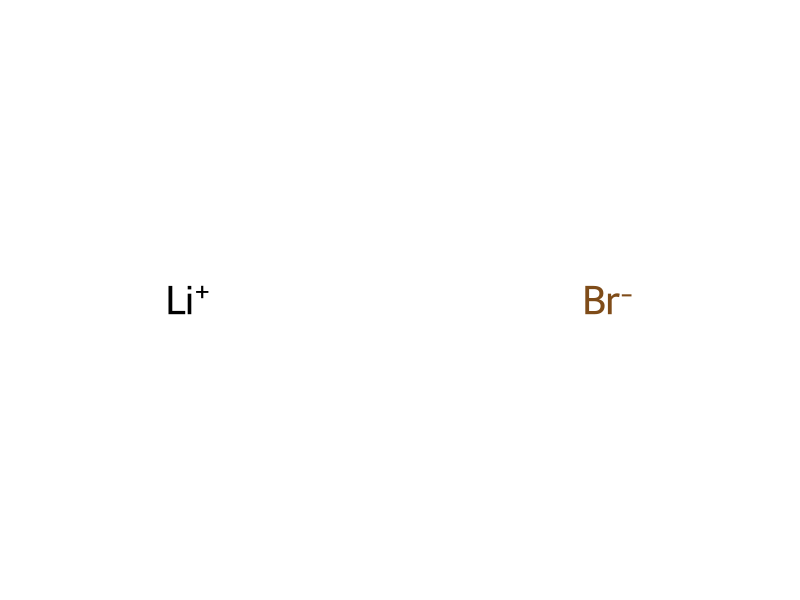
[CH2:1]([C@H:8]([NH:18][C:19](=[O:25])[O:20][C:21]([CH3:24])([CH3:23])[CH3:22])[C@@H:9]([OH:17])[C@H:10]([OH:16])[C@H:11]1[CH2:15][CH2:14][CH2:13][NH:12]1)[C:2]1[CH:7]=[CH:6][CH:5]=[CH:4][CH:3]=1.N[C@H]([CH2:37][C:38]1[CH:43]=[CH:42][CH:41]=[CH:40][CH:39]=1)[C@@H](O)[C@H]([C@H]1CCCN1)[OH:30].[C:44]([OH:50])(C(F)(F)F)=[O:45].[Br-:51].[Li+]>>[CH2:37]([N:12]([CH2:13][CH2:14][CH2:15][C@@H:11]([Br:51])[C@H:10]([OH:16])[C@H:9]([OH:17])[C@@H:8]([NH:18][C:19]([O:20][C:21]([CH3:24])([CH3:23])[CH3:22])=[O:25])[CH2:1][C:2]1[CH:7]=[CH:6][CH:5]=[CH:4][CH:3]=1)[C:44](=[O:45])[OH:50])[C:38]1[CH:39]=[CH:40][CH:41]=[CH:42][CH:43]=1.[Br:51][OH:30]Participants



Procedure
The configuration inversion at C-7 of the methyl (5E,7R,8S)-8-[(tert-butoxycarbonyl)amino]-7-hydroxy-9-phenyl-non-5-enoate (4) is obtained in three steps. Initially the amino alcohol (4) is converted to oxazolidinone by treating with methanesulfonyl chloride (Benedetti, F.; Norbedo, S. Tetrahedron Lett. 2000, 39, 10071); thus methyl (5E)-6-[(4S,5S)-4-benzyl-2-oxo-1,3-oxazolidin-5-yl]hex-5-enoate (14) is obtained. The oxazolidinone is reprotected at the nitrogen with di-tert-butyl dicarbonate to give (4S,5S)-tert-butyl 5-[(E)-5-(methoxycarbonyl)pent-1-enyl]-4-benzyl-2-oxooxazolidin-3-carboxylate (15) which is then hydrolysed under controlled conditions (two equivalents of K2CO3, or Cs2CO3) in aqueous methanol. The methyl (5E,7S,8S)-8-[(tert-butoxycarbonyl)amino]-7-hydroxy-9-phenyl-non-5-enoate (16) with (S) configuration at the C7 thus obtained is then converted, by applying the aforedescribed method for the synthesis of benzyl 3-((2R,3R)-3-{[(1S,2S)-1-hydroxy-2-[(tert-butoxycarbonyl)amino]-3-phenylpropyl}oxiran-2-yl)propylcarbamate (9), to benzyl 3-((2S,3S)-3-{[(1R,2S)-1-hydoxy-2-[(tert-butoxycarbonyl)amino]-3-phenylpropyl}oxiran-2-yl)propylcarbamate (17). By deprotecting this epoxyamine by catalytic hydrogenation, tert-butyl (1S,2R,3R)-1-benzyl-2,3-dihydroxy-3-[(2R)-pyrrolidin-2-yl]propylcarbamate (18) is thus obtained which is converted into the corresponding [(1S,2R,3R)-3-amino-4-phenyl-1-[(2R)-pyrrolidin-2-yl]butan-1,2-diol] (13) by treating with TFA. Opening the epoxide ring of benzyl 3-((2S,3S)-3-{[(1R,2S)-1-hydoxy-2-[(tert-butoxycarbonyl)amino]-3-phenylpropyl}oxiran-2-yl)propylcarbamate (17) with lithium bromide and Amberlist 15 (Bonini, C. et al. Synth. Commun. 1992, 22, 1863; Bonini, C., Righi, G. Synthesis 1994, 225) gives the bromoalcohol benzyl (4R,5R,6R,7S)-4-bromo-7-[(tert-butoxycarbonyl)amino]-5,6-dihydroxy-8-phenyl-octylcarbamate (19) which, by catalytic hydrogenation, cyclizes to give tert-butyl (1S,2R,3R)-1-benzyl-2,3-dihydroxy-3-[(2S)-pyrrolidin-2-yl]propylcarbamate (20); finally, deprotecting the primary amino group with TFA gives [(1S,2R,3R)-3-amino-4-phenyl-1-[(2S)-pyrrolidin-2-yl]butan-1,2-diol] (12).
Workup
- customis thus obtained which
Sources & evidence
- ORD record
- ord-bee54f0779c3491c97ab15fd7df26c89
- Source dataset
- uspto-grants-2010_04
- Patent number
- US07691818B2
Reaction notes
Loading…