N-(5-aminobiphenyl-3-yl)acetamide → HCID 89500189, compound
Reaction equation

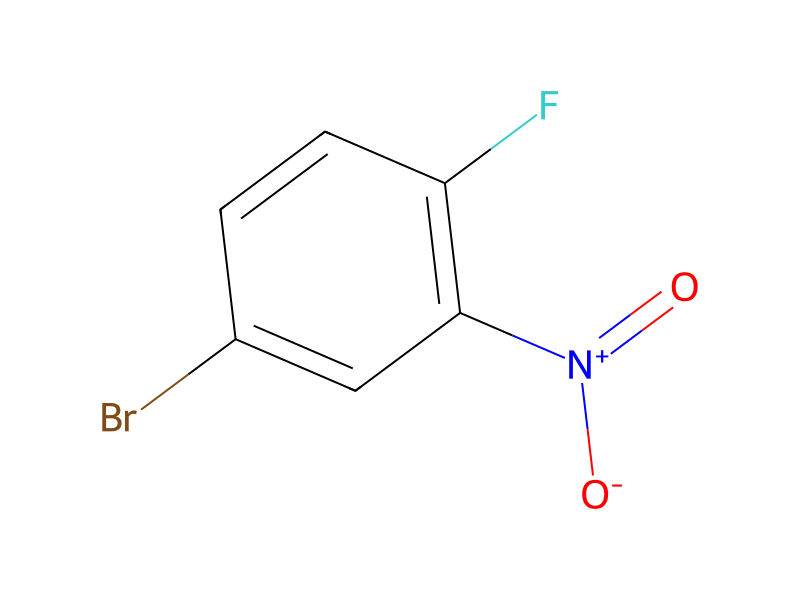
[NH2:1][C:2]1[CH:3]=[C:4]([NH:14][C:15](=[O:17])[CH3:16])[CH:5]=[C:6]([C:8]2[CH:13]=[CH:12][CH:11]=[CH:10][CH:9]=2)[CH:7]=1.[Br:18][C:19]1[CH:24]=[CH:23][C:22](F)=[C:21]([N+:26]([O-:28])=[O:27])[CH:20]=1.[F-].[K+]>CN(C=O)C>[Br:18][C:19]1[CH:24]=[CH:23][C:22]([NH:1][C:2]2[CH:3]=[C:4]([NH:14][C:15](=[O:17])[CH3:16])[CH:5]=[C:6]([C:8]3[CH:13]=[CH:12][CH:11]=[CH:10][CH:9]=3)[CH:7]=2)=[C:21]([N+:26]([O-:28])=[O:27])[CH:20]=1Participants
5
Reactant 3


Product 1

Reagents, catalysts & solvents 1

Procedure
A solution of N-(5-aminobiphenyl-3-yl)acetamide (1 g, 4.54 mmol), 4-bromo-1-fluoro-2-nitrobenzene (1.03 g, 4.54 mmol, 1.0 eq.) and potassium fluoride (0.26 g, 4.54 mmol, 1.0 eq.) in DMF (5 ml) was heated at 100° C. for 12 h. The mixture was quenched and extracted as in Example 1(d). The solvent was distilled off and the residue was purified by column chromatography (60-120 silica gel, 50% ethyl acetate in hexane) to give the product in 52% yield (1 g).
Workup
- customThe mixture was quenched
- extractionextracted as in Example 1(d)
- distillationThe solvent was distilled off
- customthe residue was purified by column chromatography (60-120 silica gel, 50% ethyl acetate in hexane)
- customto give the product in 52% yield (1 g)
Sources & evidence
- ORD record
- ord-da7db2bc9a134222a5664122d7f604ea
- Source dataset
- uspto-grants-2016_09
- Patent number
- US09447091B2
Reaction notes
Loading…