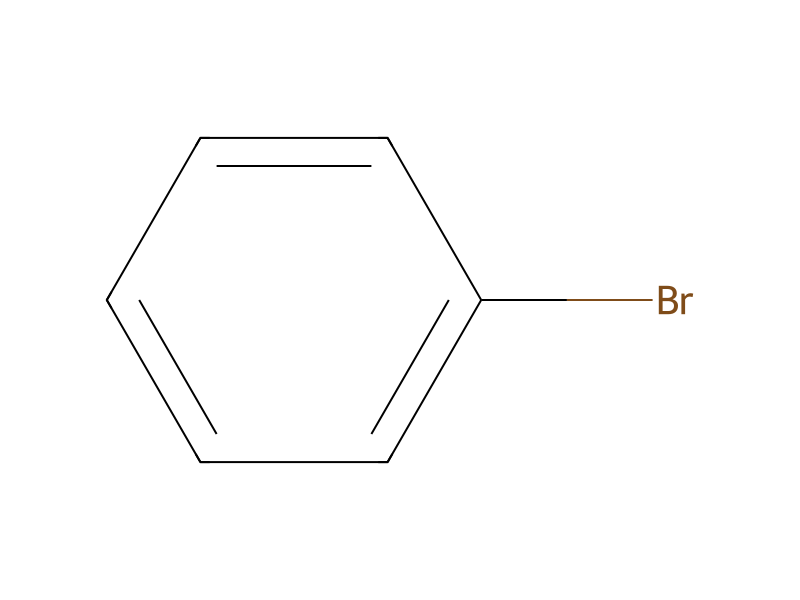
Bromobenzene → 1-Phenylpyrrolidin-2-one
Reaction equation

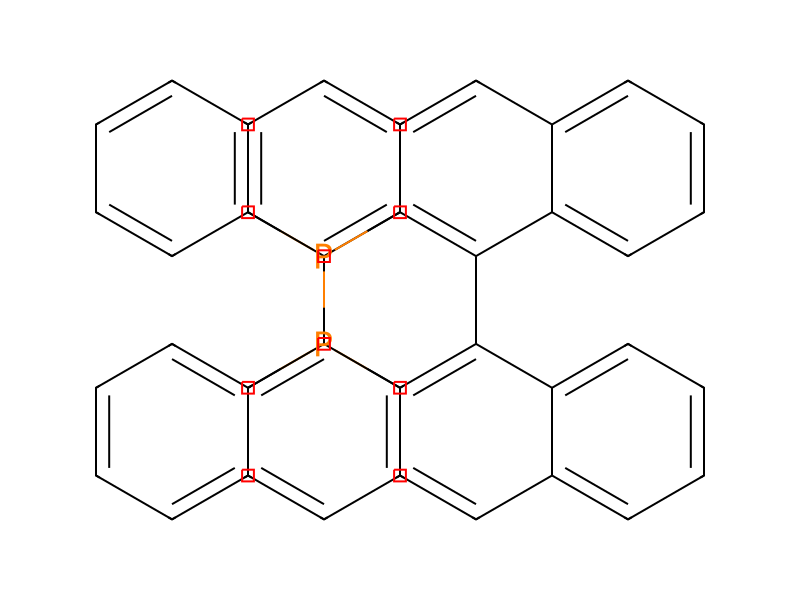
Br[C:2]1[CH:7]=[CH:6][CH:5]=[CH:4][CH:3]=1.[NH:8]1[CH2:12][CH2:11][CH2:10][C:9]1=[O:13].C1C=CC(P(C2C(C3C(P(C4C=CC=CC=4)C4C=CC=CC=4)=CC=C4C=3C=CC=C4)=C3C(C=CC=C3)=CC=2)C2C=CC=CC=2)=CC=1.C([O-])([O-])=O.[Cs+].[Cs+]>CC([O-])=O.CC([O-])=O.[Pd+2].C1(C)C=CC=CC=1>[C:2]1([N:8]2[CH2:12][CH2:11][CH2:10][C:9]2=[O:13])[CH:7]=[CH:6][CH:5]=[CH:4][CH:3]=1Participants
Reactant 4


Product 1

Reagents, catalysts & solvents 2


Conditions
- Temperature
- 120 °C
Procedure
Into a 150 mL sealed tube purged and maintained with an atmosphere of nitrogen, was placed 1-bromobenzene (4 g, 25.48 mmol). To this was added pyrrolidin-2-one (2.18 g, 25.65 mmol). Addition of Pd(OAc)2 (57 mg, 0.25 mmol) was next. This was followed by the addition of BINAP (240 mg, 0.39 mmol). This was followed by the addition of Cs2CO3 (12.5 g, 38.34=mol). To the mixture was added toluene (50 mL). The resulting solution was allowed to react, with stirring, overnight while the temperature was maintained at 120° C. in a bath of oil. The mixture was concentrated by evaporation under vacuum using a rotary evaporator. The residue was purified by eluting through a column with a 1:10 ethyl acetate/petroleum ether solvent system. This resulted in 1 g (24%) of 1-phenylpyrrolidin-2-one as yellow oil.
Workup
- customInto a 150 mL sealed tube
- custompurged
- temperaturemaintained with an atmosphere of nitrogen
- customto react
- concentrationThe mixture was concentrated by evaporation under vacuum
- customa rotary evaporator
- customThe residue was purified
- washby eluting through a column with a 1:10 ethyl acetate/petroleum ether solvent system
- customThis resulted in 1 g (24%) of 1-phenylpyrrolidin-2-one as yellow oil
Sources & evidence
- ORD record
- ord-3fd9d4b6be744258b6a93e1ded9fd176
- Source dataset
- uspto-grants-2010_04
- Patent number
- US07696229B2
Reaction notes
Loading…