Catechol → Phenol, 2-[(6-chloro-3-pyridazinyl)oxy]-
Reaction equation

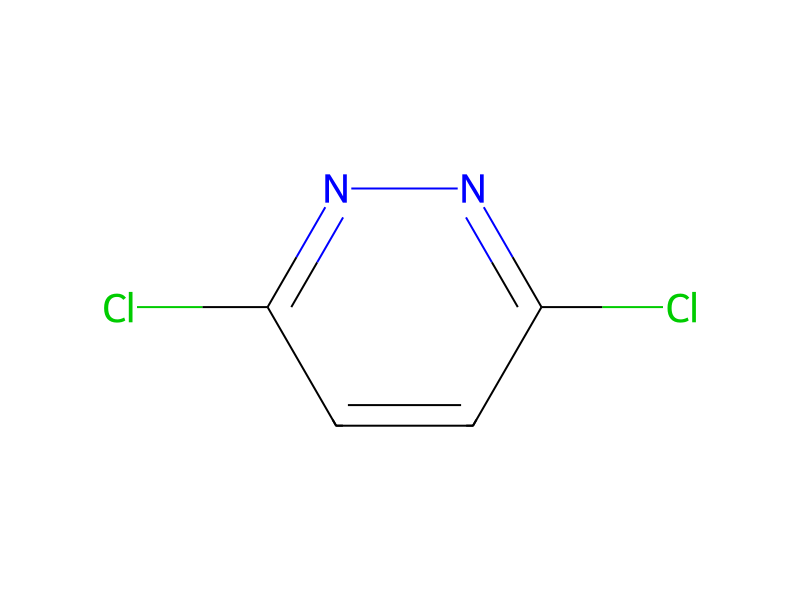
[Cl:1][C:2]1[N:3]=[N:4][C:5](Cl)=[CH:6][CH:7]=1.[C:9]1([C:11](=[CH:13][CH:14]=[CH:15][CH:16]=1)[OH:12])[OH:10].C(=O)([O-])[O-].[K+].[K+].[OH-].[Na+]>CS(C)=O>[Cl:1][C:2]1[N:3]=[N:4][C:5]([O:10][C:9]2[CH:16]=[CH:15][CH:14]=[CH:13][C:11]=2[OH:12])=[CH:6][CH:7]=1Participants
Reactant 4



Product 1

Reagents, catalysts & solvents 1

Procedure
14.9 g of 3,6-dichloropyridazine and 14.3 g of catechol are dissolved in 40 ml of dimethyl sulfoxide, followed by addition of 15.2 g of anhydrous potassium carbonate. The mixture is heated gradually, and stirred at 80° to 90° C. for 2 hours. The reaction mixture, after cooling down, is poured into 300 ml of a 10% aqueous solution of sodium hydroxide. The resulting insoluble precipitates are filtered off and the filtrate is neutralized with concentrated hydrochloric acid. After the resulting crystals are filtrated, followed by drying to yield 13.4 g of title compound. When this product is subjected to treatment with activated charcoal and recrystallized from acetone, to yield colorless crystals of the title compound melting at 146.5°-148° C.
Workup
- temperatureThe mixture is heated gradually
- temperatureThe reaction mixture, after cooling down
- customThe resulting insoluble precipitates
- filtrationare filtered off
- filtrationAfter the resulting crystals are filtrated
- customby drying
Sources & evidence
- ORD record
- ord-aac8ec5e75a14eb79869ec3d1751672e
- Source dataset
- uspto-grants-1988_04
- Patent number
- US04740505
Reaction notes
Loading…