Hydrochloric Acid → Cyclopentadiene
Reaction equation

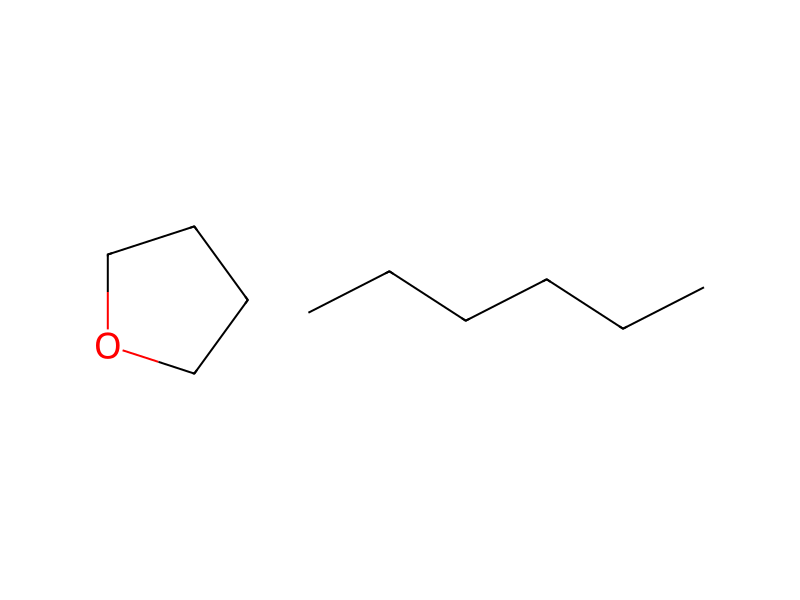
Cl[CH2:2][CH2:3][N:4]([CH3:6])[CH3:5].Cl.[CH:8]1([Li:13])[CH:12]=[CH:11][CH:10]=[CH:9]1>C1COCC1.CCCCCC.C1COCC1>[CH3:5][N:4]([CH3:6])[CH2:3][CH2:2][C:12]1[CH2:11][CH:10]=[CH:9][CH:8]=1.[CH2:8]([Li:13])[CH2:9][CH2:10][CH3:11].[CH:12]1[CH2:11][CH:10]=[CH:9][CH:8]=1Participants
8
Reactant 3



Product 3



Reagents, catalysts & solvents 2

Procedure
(2-dimethylaminoethyl) cyclopentadiene was synthesized by a modification of a literature procedure as disclosed in J. Organomet. Chem., Vol. 423, p. 31, 1992. 2-Chloro-1-(dimethylamino) ethane (43.04 g, 400 mmol) free of hydrogen chloride was added slowly to a stirred suspension of cyclopentadienyllithium in THF/hexane (1:1) (obtained from the reaction of n-butyllithium (250 ml, 1.6M in hexane) with freshly distilled cyclopentadiene (33.0 ml, 400 mmol) in THF (250 ml) at 0° C. and the reaction mixture refluxed overnight. Filtration of the lithium chloride, removal of the solvents, and a trap-to-trap distillation at reduced pressure afforded (2-dimethylaminoethyl) cyclopentadiene as a colorless liquid (53.58 g, 98%).
Sources & evidence
- ORD record
- ord-b040e015849f4f0885dfb664cfcb7ffa
- Source dataset
- uspto-grants-2001_08
- Patent number
- US06271322B1
Reaction notes
Loading…