Hydrochloric Acid → 1,2,3,4-Tetrahydroisoquinoline-6-carbonitrile hydrochloride
Reaction equation

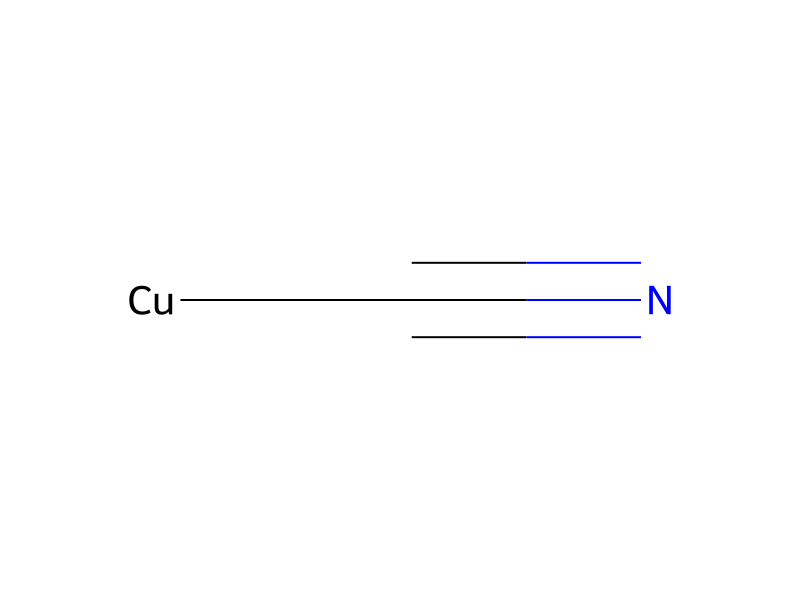
[Cu][C:2]#[N:3].[ClH:4].[CH3:5][N:6]1[CH2:10][CH2:9][CH2:8][C:7]1=O>CCOCC>[ClH:4].[C:2]([C:8]1[CH:7]=[C:8]2[C:7](=[CH:10][CH:9]=1)[CH2:5][NH:6][CH2:10][CH2:9]2)#[N:3]Participants




Procedure
A solution of 6-bromo-1,2,3,4-tetrahydroisoquinoline hydrochloride (6.0 g, 24 mmol) and triethylamine (7.4 ml, 5.36 g, 53 mmol) in dichloromethane (100 ml) was treated with trifluoroacetic anhydride (3.7 ml, 5.54 g, 26.4 mmol) with ice cooling. Mixture was stirred at 20° C. for 1.5 h. then partitioned between saturated aqueous NaHCO3 (250 ml) and dichloromethane (3×50 ml). Combined organic extracts were dried (Na2SO4) and evaporated in vacuo to give a solid (8.3 g). A mixture of the latter with copper (I) cyanide (5.1 g, 56.6 mmol) in 1-methyl-2-pyrrolidinone (100 ml) was heated at reflux under argon for 4 h, then cooled and partitioned between water (300 ml), 0.880 aqueous ammonia (100 ml) and dichloromethane (5×200 ml). Combined organic extracts were dried (Na2SO4) and evaporated in vacuo to give an oil. The latter was dissolved in ether and treated with ethereal HCl to give the title compound (4.47 g, 85%) as a colourless solid.
Workup
- temperaturewas heated
- temperatureat reflux under argon for 4 h
- temperaturecooled
- custompartitioned between water (300 ml), 0.880 aqueous ammonia (100 ml) and dichloromethane (5×200 ml)
- dry with materialCombined organic extracts were dried (Na2SO4)
- customevaporated in vacuo
- customto give an oil
Sources & evidence
- ORD record
- ord-8abc15af9dc444c8adcfbbcd8de3b070
- Source dataset
- uspto-grants-2001_08
- Patent number
- US06274593B1
Reaction notes
Loading…