Dimethylamine → 5-Bromo-N,N-dimethyl-α-oxo-1H-indole-3-acetamide
Reaction equation

[Br:1][C:2]1[CH:3]=[C:4]2[C:8](=[CH:9][CH:10]=1)[NH:7][CH:6]=[CH:5]2.[C:11](Cl)(=[O:15])[C:12](Cl)=[O:13].[CH3:17][NH:18][CH3:19]>O1CCCC1.O.C(OCC)(=O)C.CCCCCC>[Br:1][C:2]1[CH:3]=[C:4]2[C:8](=[CH:9][CH:10]=1)[NH:7][CH:6]=[C:5]2[C:11](=[O:15])[C:12]([N:18]([CH3:19])[CH3:17])=[O:13]Participants
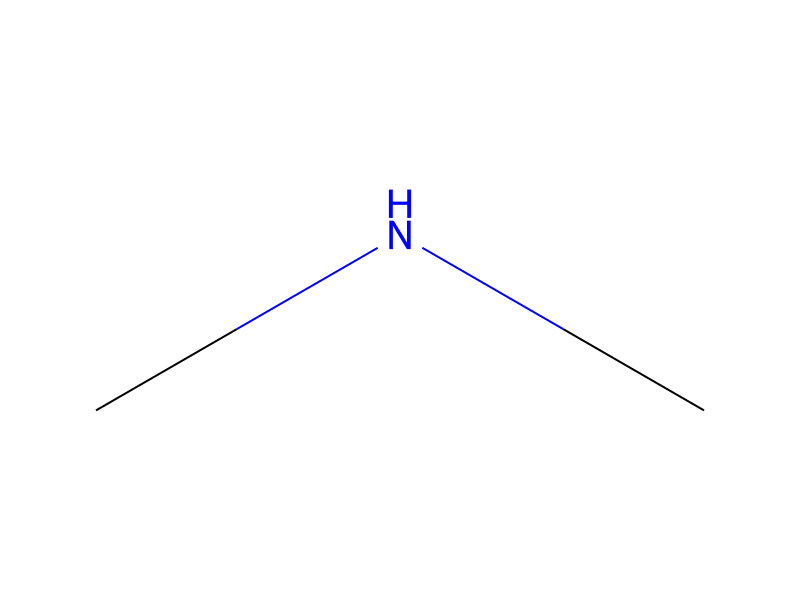






Procedure
To a solution of 5-bromoindole (15.85 g, 81 mmol) in tetrahydrofuran (80 ml) at 0-5° C. under an atmosphere of nitrogen was added oxalyl chloride (7.76 ml 89 mmol) dropwise, maintaining the temperature below 5° C. The cloudy solution was then warmed to ambient temperature and stirred for 30 min, before being re-cooled to 0-5° C. The solution was then saturated with anhydrous dimethylamine for 30 min, which resulted in formation of a yellow precipitate. The slurry was then warmed to ambient temperature and diluted with demineralised water (100 ml) before being extracted with dichloromethane (3×50 ml). The organic extracts were combined and evaporated in vacuo to give a white solid. This was slurried in a mixture of ethyl acetate:hexane (1:1) (40 ml) for 8 hr and then filtered in vacuo to give the subtitle compound (20.28 g, 85%) as a white solid. m.p. 189-190° C.
Workup
- temperaturemaintaining the temperature below 5° C
- temperaturebefore being re-cooled to 0-5° C
- customwhich resulted in formation of a yellow precipitate
- temperatureThe slurry was then warmed to ambient temperature
- extractionbefore being extracted with dichloromethane (3×50 ml)
- customevaporated in vacuo
- customto give a white solid
- filtrationfiltered in vacuo
Sources & evidence
- ORD record
- ord-c42fd43660c54b719f43f53cf7b8e98c
- Source dataset
- uspto-grants-2001_08
- Patent number
- US06281357B1
Reaction notes
Loading…