Dichloromethane → 2-Chloro-5-methyl-7-phenyl-1,2,4-triazolo[1,5-a]pyrimidine
Reaction equation

[CH3:1][C:2]1[CH:7]=[C:6]([C:8]2[CH:13]=[CH:12][CH:11]=[CH:10][CH:9]=2)[N:5]2[N:14]=[C:15](N)[N:16]=[C:4]2[N:3]=1.N([O-])=O.[Na+].C(OCC)(=O)C.C(Cl)[Cl:29]>Cl.O.C(Cl)Cl.C(OCC)(=O)C>[Cl:29][C:15]1[N:16]=[C:4]2[N:3]=[C:2]([CH3:1])[CH:7]=[C:6]([C:8]3[CH:13]=[CH:12][CH:11]=[CH:10][CH:9]=3)[N:5]2[N:14]=1Participants
Reactant 4




Product 1

Reagents, catalysts & solvents 3


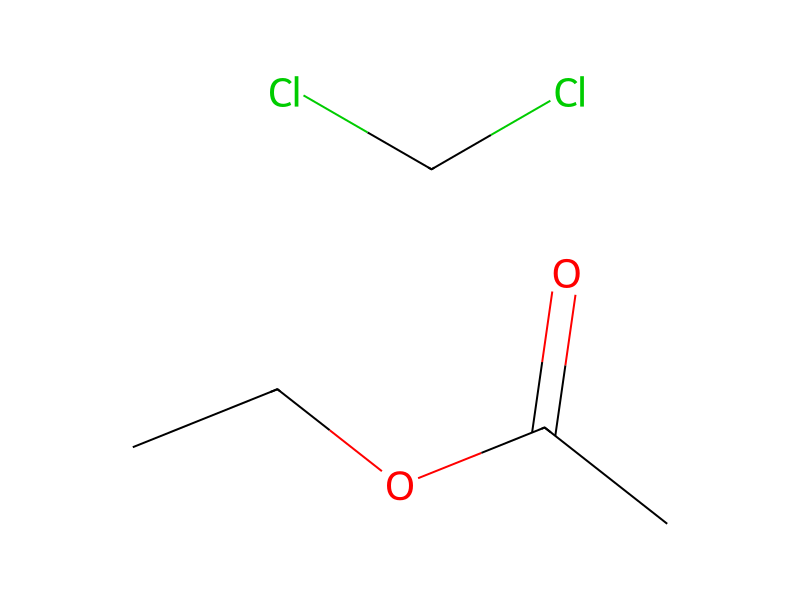
Procedure
To 2.0 g (8.9 mmol) of 5-methyl-7-phenyl-1,2,4triazolo[1,5-a]pyrimidin-2-amine stirring in 25 ml of concentrated hydrochloric acid, 1.2 g (17.4 mmol) of sodium nitrite dissolved in 4.0 ml of water was added dropwise at ambient temperature. After the addition, the reaction suspension was warmed at about 60° for 15 minutes followed by stirring another 10 minutes without heat. Ethyl acetate (150 ml) and excess water were added. The ethyl acetate layer was separated whereby a certain amount of insoluble material present was ignored and the extract washed with water (2X), saturated sodium bicarbonate, brine, dried over magnesium sulfate, and evaporated in vacuo to give a solid residue. Silica gel column chromatography (methylene chloride followed by 10:1 methylene chloride/ethyl acetate) afforded the title compound, m.p. 179°-181° C.
Workup
- additionwas added dropwise at ambient temperature
- additionAfter the addition
- temperaturethe reaction suspension was warmed at about 60° for 15 minutes
- temperaturewithout heat
- customThe ethyl acetate layer was separated whereby a certain amount of insoluble material present
- washthe extract washed with water (2X), saturated sodium bicarbonate, brine
- dry with materialdried over magnesium sulfate
- customevaporated in vacuo
- customto give a solid residue
Sources & evidence
- ORD record
- ord-1f4663c575454f6e849cda5b4abc5106
- Source dataset
- uspto-grants-1992_07
- Patent number
- US05127936
Reaction notes
Loading…