Hydrochloric Acid → HCID 53910335, compound
Reaction equation

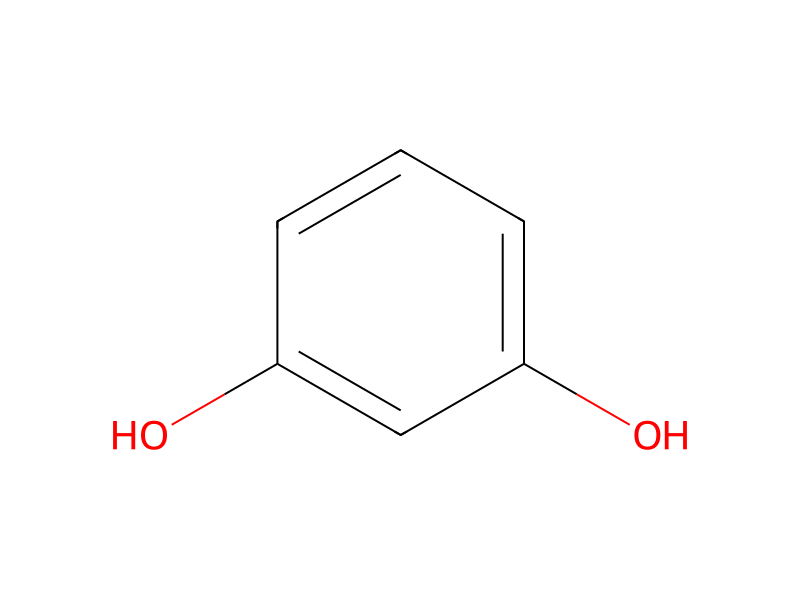
[C:1]1([CH:8]=[CH:7][CH:6]=[C:4]([OH:5])[CH:3]=1)[OH:2].[C:9]([C:12]1[CH:17]=[CH:16][C:15]([C:18]([CH3:20])=[CH2:19])=[CH:14][CH:13]=1)([CH3:11])=[CH2:10].Cl>C(O)(=O)C>[OH:2][C:1]1[CH:3]=[C:4]([OH:5])[CH:6]=[CH:7][C:8]=1[C:9]([C:12]1[CH:13]=[CH:14][C:15]([C:18]([C:6]2[CH:7]=[CH:8][C:1]([OH:2])=[CH:3][C:4]=2[OH:5])([CH3:20])[CH3:19])=[CH:16][CH:17]=1)([CH3:11])[CH3:10]Participants
5
Reactant 3


Product 1

Reagents, catalysts & solvents 1

Conditions
- Temperature
- 70 °C
Procedure
110.0 g Resorcinol, 15.8 g p-diisopropenylbenzene and 200 ml glacial acetic acid were added to a flask and heated to about 70° C. to dissolve the reactants. Anhydrous hydrogen chloride was condensed into the reaction mixture until saturated. The reaction was allowed to cool and stand at ambient temperature for 17 hours. The product was precipitated in water, washed with water and vacuum dried at 60° C. About 29.1g of product with a melting point of about 110° to 115° C. was obtained.
Workup
- dissolutionto dissolve the reactants
- customcondensed into the reaction mixture until saturated
- temperatureto cool
- customThe product was precipitated in water
- washwashed with water and vacuum
- customdried at 60° C
Sources & evidence
- ORD record
- ord-cf3bd386436746ce888de4f6fcdea415
- Source dataset
- uspto-grants-1992_07
- Patent number
- US05128230
Reaction notes
Loading…