Dichloromethane → Tobramycin
Reaktionsgleichung

ClCCl.[CH2:4]1[C@@H:9]([NH2:10])[C@H:8]([O:11][C@H:12]2[O:17][C@H:16]([CH2:18][OH:19])[C@@H:15]([OH:20])[C@H:14]([NH2:21])[C@H:13]2[OH:22])[C@@H:7]([OH:23])[C@H:6]([O:24][C@H:25]2[O:30][C@H:29]([CH2:31][NH2:32])[C@@H:28]([OH:33])[CH2:27][C@H:26]2[NH2:34])[C@H:5]1[NH2:35].OS(O)(=O)=O>O>[CH2:4]1[C@@H:9]([NH2:10])[C@H:8]([O:11][C@H:12]2[O:17][C@H:16]([CH2:18][OH:19])[C@@H:15]([OH:20])[C@H:14]([NH2:21])[C@H:13]2[OH:22])[C@@H:7]([OH:23])[C@H:6]([O:24][C@H:25]2[O:30][C@H:29]([CH2:31][NH2:32])[C@@H:28]([OH:33])[CH2:27][C@H:26]2[NH2:34])[C@H:5]1[NH2:35]Komponenten
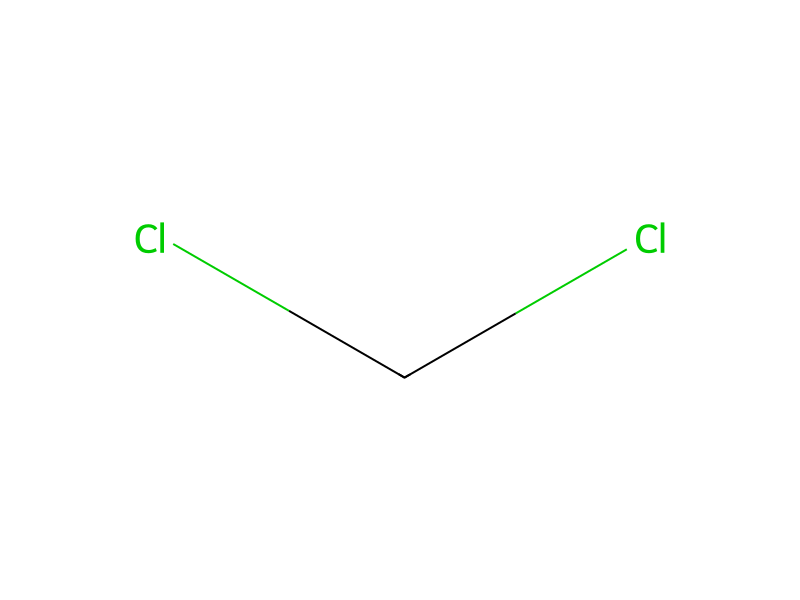


Reagenzien, Katalysatoren, Lösungsmittel 1
Versuchsvorschrift
To a solution of 50 ml of dichloromethane was added 10 grams of soy lecithin and 200 mg of tobramycin sulfate in 5 ml of water. Fifty ml of additional dichloromethane was added and the solution was mixed by shaking. Eight ml of solution (4 ml per side) was added to a 1"×1" foam wound bandage material which was then allowed to air dry. The materials were analyzed for residual dichloromethane by high pressure liquid chromatography and found to contain no detectable residual dichloromethane. The 1"×1" foam wound materials were packaged individually in heat sealed bags and stored at room temperature for two months. At the end of two months the packages were opened and a representative first sample of SDMC-forming foam wound bandages were removed, placed onto grid supports, and wetted with 5 ml of water. Two ml of eluent containing SDMC-entrapped tobramycin were collected from the first sample. A second representative sample of SDMC-forming foam wound bandages were stressed by heating to +70° C. for three days. A third representative sample of SDMC-forming foam wound bandages were stressed by freezing at -70° C. for three days, then allowed to equilibrate to room temperature. These stressed foam wound dressings were then placed onto grid supports, wetted with 5 ml of water, and 2 ml of eluent containing SDMC-entrapped tobramycin was collected. All samples were subjected to analysis for tobramycin entrapped as explained in Example 3. The results are shown in Table VII.
Aufarbeitung
- additionthe solution was mixed
- customto air dry
- temperaturein heat
- customsealed bags
- waitstored at room temperature for two months
- customAt the end of two months
- customwere removed
- additionTwo ml of eluent containing SDMC-entrapped tobramycin
- customwere collected from the first sample
- temperatureby heating to +70° C. for three days
- customto equilibrate to room temperature
- additioncontaining SDMC-entrapped tobramycin
- customwas collected
Quellen und Nachweise
- ORD-Eintrag
- ord-569d720804c447c2bd1725e9b07ea2ed
- Quelldatensatz
- uspto-grants-1992_07
- Patentnummer
- US05133965
Notizen zur Reaktion
Wird geladen…