1,10-Phenanthroline → N-(4-Pyrazol-1-yl-phenyl)-hydrazinecarboxylic Acid tert-butyl Ester
Reaction equation

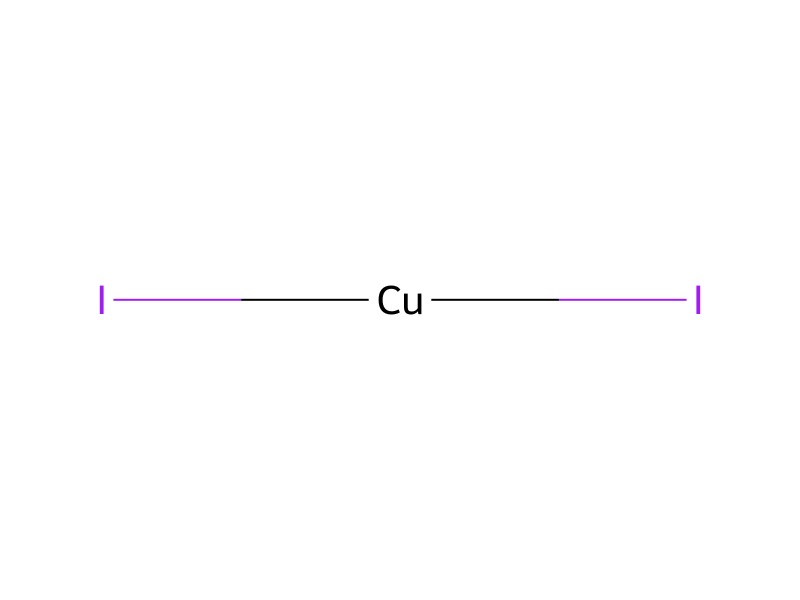
N1C2C(=CC=C3C=2N=CC=C3)C=CC=1.C(=O)([O-])[O-].[Cs+].[Cs+].I[C:22]1[CH:27]=[CH:26][C:25]([N:28]2[CH:32]=[CH:31][CH:30]=[N:29]2)=[CH:24][CH:23]=1.[C:33]([O:37][C:38]([NH:40][NH2:41])=[O:39])([CH3:36])([CH3:35])[CH3:34]>[Cu](I)I.CN(C=O)C>[C:33]([O:37][C:38]([N:40]([C:22]1[CH:27]=[CH:26][C:25]([N:28]2[CH:32]=[CH:31][CH:30]=[N:29]2)=[CH:24][CH:23]=1)[NH2:41])=[O:39])([CH3:36])([CH3:35])[CH3:34]Participants
Reactant 4




Product 1

Reagents, catalysts & solvents 2

Conditions
- Temperature
- 80 °C
Procedure
Copper iodide (18 mg, 0.05 eq, 0.09 mmol), 1,10-phenanthroline (67 mg, 0.2 eq, 0.37 mmol) and caesium carbonate (0.84 g, 1.4 eq, 2.6 mmol) were mixed in a RB flask, placed under vacuum and purged with N2 (g). 1-(4-Iodo-phenyl)-1H-pyrazole (0.5 g, 1.0 eq, 1.85 mmol), hydrazine carboxylic acid tert-butyl ester (0.3 g, 1.2 eq, 2.22 mmol) and DMF (25 ml) were added to the mixture which was then heated to 80° C. with stirring under an inert atmosphere for 21 hours. The reaction mixture was allowed to cool and was then filtered through a silica pad, which was then washed with ethyl acetate. The filtrate was then concentrated to dryness in vacuo. The resultant residue was purified by column chromatography using heptane/ethyl acetate (3:1) as eluent to yield impure title compound (0.42 g). LCMS: [M+H]+=275, rt=1.25 min, 48% purity.
Workup
- custompurged with N2 (g)
- temperatureto cool
- filtrationwas then filtered through a silica pad, which
- washwas then washed with ethyl acetate
- concentrationThe filtrate was then concentrated to dryness in vacuo
- customThe resultant residue was purified by column chromatography
Sources & evidence
- ORD record
- ord-a6c1ae55b6d94996b6b07f9a0070461f
- Source dataset
- uspto-grants-2011_12
- Patent number
- US08071607B2
Reaction notes
Loading…