Dimethylformamide → 3-(Hydroxymethyl)-5-(trifluoromethyl)benzonitrile
Reaction equation

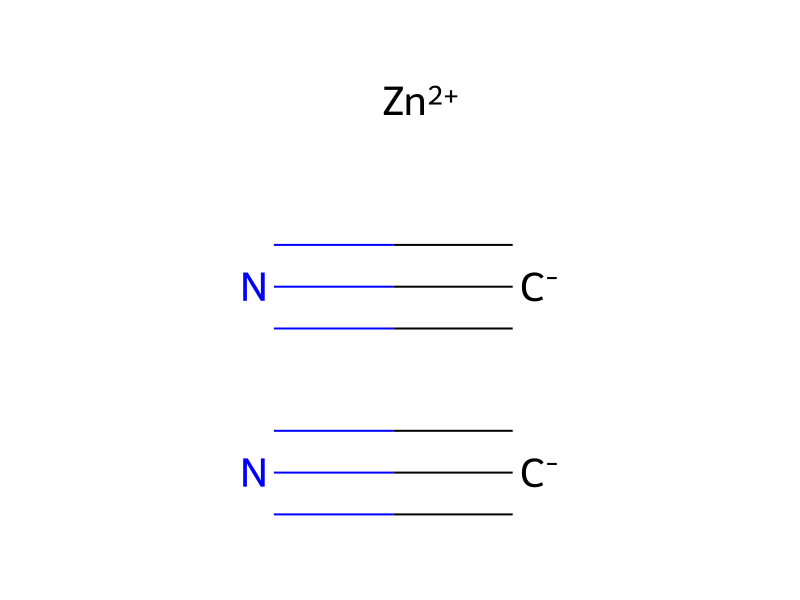
Br[C:2]1[CH:3]=[C:4]([CH2:12][OH:13])[CH:5]=[C:6]([C:8]([F:11])([F:10])[F:9])[CH:7]=1.[CH3:14][N:15](C)C=O>[C-]#N.[Zn+2].[C-]#N.C1C=CC([P]([Pd]([P](C2C=CC=CC=2)(C2C=CC=CC=2)C2C=CC=CC=2)([P](C2C=CC=CC=2)(C2C=CC=CC=2)C2C=CC=CC=2)[P](C2C=CC=CC=2)(C2C=CC=CC=2)C2C=CC=CC=2)(C2C=CC=CC=2)C2C=CC=CC=2)=CC=1>[OH:13][CH2:12][C:4]1[CH:3]=[C:2]([CH:7]=[C:6]([C:8]([F:11])([F:10])[F:9])[CH:5]=1)[C:14]#[N:15]Participants




Conditions
- Temperature
- 120 °C
Procedure
3-Nitro-5-(trifluoromethyl)benzoic acid (50 g) is dissolved in tetrahydrofuran (300 ml) and thereto is added dropwise a 1.0M-borane tetrahydrofuran complex/tetra-hydrofuran (300 ml) at 0° C. under nitrogen atmosphere over 2 hours and the mixture is stirred at 75° C. for 1 hour and a half. The reaction solution is allowed cool to room temperature and concentrated under reduced pressure, and thereto is added a 1N-hydrochloric acid and the mixture is extracted with ethyl acetate. The organic layer is washed successively with water and a saturated brine, dried over magnesium sulfate, and concentrated under reduced pressure to give crude (3-nitro-5-trifluoromethyl-phenyl)-methanol. This product is dissolved in methanol (500 mL) and thereto is added 10% palladium-carbon (5 g) and the mixture is stirred under hydrogen atmosphere at room temperature overnight. The catalyst is removed by filtration, and the filtrate is concentrated under reduced pressure to give crude (3-amino-5-trifluoromethyl-phenyl)-methanol. To copper (II) bromide (53.6 g) is added acetonitrile (500 ml), followed by an addition dropwise of tert-butyl nitrite (35.7 ml) under ice-cooling and the mixture is stirred under nitrogen atmosphere for 5 minutes. To reaction mixture is added dropwise a solution of the above crude (3-amino-5-trifluoromethyl-phenyl)-methanol in acetonitrile (200 ml) under ice-cooling over 1 hour and 15 minutes and the mixture is stirred at room temperature under nitrogen atmosphere overnight. To reaction mixture is added a 1N-hydrochloric acid and the mixture is extracted with ethyl acetate. The organic layer is washed successively with a 1N-hydrochloric acid, water and a saturated brine, dried over magnesium sulfate, and concentrated under reduced pressure. The resulting residue is purified by silica gel column chromatography (hexane:ethyl acetate=7:1→4:1) to give (3-bromo-5-trifluoromethyl-phenyl)-methanol (40.7 g). NMR (CDCl3): 1.90 (1H, t), 4.76 (2H, d), 7.56 (1H, s), 7.68 (1H, s), 7.72 (1H, s). (2) (3-Bromo-5-trifluoromethyl-phenyl)-methanol (33.9 g) is dissolved in N,N-dimethylformamide (400 mL) and thereto are added zinc (II) cyanide (16.39 g) and tetrakis(triphenylphosphine)palladium (7.68 g) and the mixture is heated under nitrogen atmosphere at 120° C. for 2 hours. The reaction solution is allowed cool to room temperature, and filtered through Celite™, and the filtrate is concentrated under reduced pressure. Thereto is added water and the mixture is extracted with ethyl acetate. The organic layer is washed with a saturated brine, dried over sodium sulfate, and concentrated under reduced pressure. The resulting residue is purified by silica gel column chromatography (hexane:ethyl acetate=2:1) to give 3-hydroxymethyl-5-trifluoromethyl-benzonitrile (23.4 g). NMR (CDCl3): 2.09 (1H, t), 4.85 (2H, d), 7.83 (1H, s), 7.87 (2H, s). (3) 3-Hydroxymethyl-5-trifluoromethyl-benzonitrile (23.4 g) is dissolved in methylene chloride (230 mL) and thereto is added carbon tetrabromide (42.4 g), followed by an addition of triphenylphosphine (32.0 g) under ice-cooling and the mixture is stirred at the same temperature for 30 minutes. The reaction solution is concentrated under reduced pressure. The resulting residue is purified by silica gel column chromatography (hexane:ethyl acetate=10:1) to give 3-bromomethyl-5-trifluoromethyl-benzonitrile (25.5 g). NMR (CDCl3): 4.51 (2H, s), 7.86 (1H, s), 7.88 (2H, s).
Workup
- temperatureThe reaction solution is allowed cool to room temperature
- filtrationfiltered through Celite™
- concentrationthe filtrate is concentrated under reduced pressure
- additionThereto is added water
- extractionthe mixture is extracted with ethyl acetate
- washThe organic layer is washed with a saturated brine
- dry with materialdried over sodium sulfate
- concentrationconcentrated under reduced pressure
- customThe resulting residue is purified by silica gel column chromatography (hexane:ethyl acetate=2:1)
Sources & evidence
- ORD record
- ord-ce48a1a9353043a59327800e99396949
- Source dataset
- uspto-grants-2011_12
- Patent number
- US08084611B2
Reaction notes
Loading…