Pyridine → 2-(7-Chloro-1,8-naphthyridin-2-yl)-3-dimethylaminocarbonyloxy-isoindolin-1-one
Reaction equation

N1C=CC=CC=1.C(N(CC)CC)C.[CH3:14][N:15]([CH3:19])[C:16](Cl)=[O:17].[Cl:20][C:21]1[N:30]=[C:29]2[C:24]([CH:25]=[CH:26][C:27]([N:31]3[CH:39]([OH:40])[C:38]4[C:33](=[CH:34][CH:35]=[CH:36][CH:37]=4)[C:32]3=[O:41])=[N:28]2)=[CH:23][CH:22]=1>C(Cl)Cl.O>[Cl:20][C:21]1[N:30]=[C:29]2[C:24]([CH:25]=[CH:26][C:27]([N:31]3[CH:39]([O:40][C:16]([N:15]([CH3:19])[CH3:14])=[O:17])[C:38]4[C:33](=[CH:34][CH:35]=[CH:36][CH:37]=4)[C:32]3=[O:41])=[N:28]2)=[CH:23][CH:22]=1Participants
Reactant 4

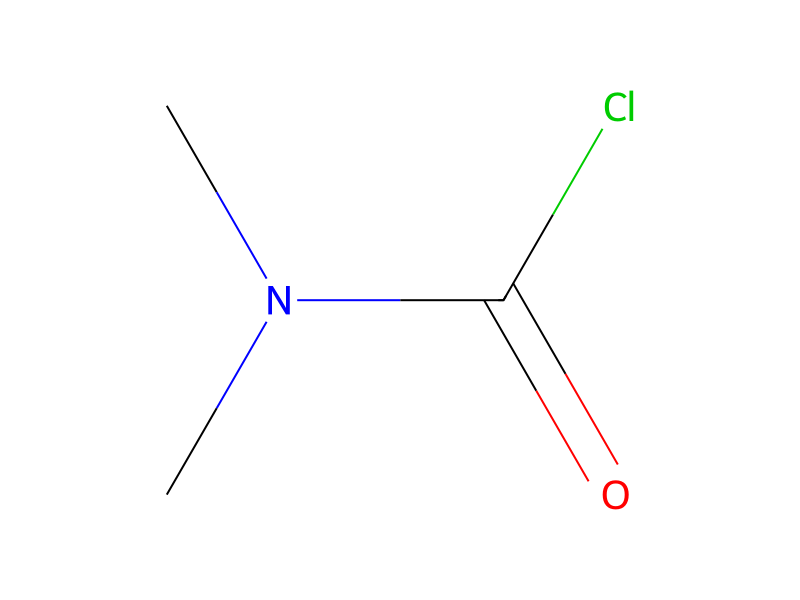


Product 1

Reagents, catalysts & solvents 2


Procedure
Pyridine (10 cc.), triethylamine (5 cc.) and dimethylcarbamoyl chloride (1.61 g.) are added successively to a suspension of 2-(7-chloro-1,8-naphthyridin-2-yl)-3-hydroxy-isoindolin-1-one (3.11 g.) in methylene chloride (50 cc.). The reaction mixture is stirred for 16 hours at a temperature of about 20° C. and water (50 cc.) and methylene chloride (25 cc.) are then added. The aqueous layer is decanted off and washed with methylene chloride (2 × 25 cc.). The organic layers are combined, washed with water (2 × 25 cc.), dried over sodium sulphate and evaporated to dryness under reduced pressure. Recrystallisation of the residue obtained from acetonitrile (45 cc.) gives 2-(7-chloro-1,8-naphthyridin-2-yl)-3-dimethylaminocarbonyloxy-isoindolin-1-one (2.8 g.) melting at 218° C.
Workup
- additionare then added
- customThe aqueous layer is decanted off
- washwashed with methylene chloride (2 × 25 cc.)
- washwashed with water (2 × 25 cc.)
- dry with materialdried over sodium sulphate
- customevaporated to dryness under reduced pressure
- customRecrystallisation of the residue
- customobtained from acetonitrile (45 cc.)
Sources & evidence
- ORD record
- ord-43a0c6e23a974922b33e781c8dadb8d1
- Source dataset
- uspto-grants-1978_12
- Patent number
- US04131674
Reaction notes
Loading…