1,1'-Carbonyldiimidazole → 1-[3-(2-quinolylcarbonyl)propionyl]-L-proline
Reaction equation

[N:1]1[C:10]2[C:5](=[CH:6][CH:7]=[CH:8][CH:9]=2)[CH:4]=[CH:3][C:2]=1[C:11]([CH2:13][CH2:14][C:15]([OH:17])=O)=[O:12].[NH:18]1[CH2:25][CH2:24][CH2:23][C@H:19]1[C:20]([OH:22])=[O:21].C(N1C=CN=C1)(N1C=CN=C1)=O>O1CCCC1>[N:1]1[C:10]2[C:5](=[CH:6][CH:7]=[CH:8][CH:9]=2)[CH:4]=[CH:3][C:2]=1[C:11]([CH2:13][CH2:14][C:15]([N:18]1[CH2:25][CH2:24][CH2:23][C@H:19]1[C:20]([OH:22])=[O:21])=[O:17])=[O:12]Participants
5
Reactant 3

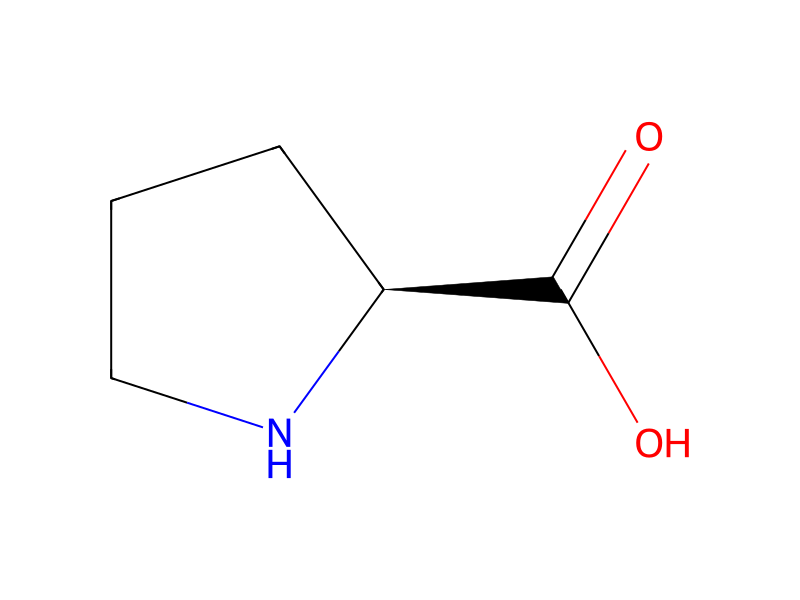

Product 1

Reagents, catalysts & solvents 1

Procedure
As for Example 6, 3-(2-quinolylcarbonyl)propionic acid (0.01 mole) is coupled to L-proline (0.011 mole) with 1,1'-carbonyldiimidazole (0.01 mole) in tetrahydrofuran to give 1-[3-(2-quinolylcarbonyl)propionyl]-L-proline. Bromination of the preceding compound and reaction of the resulting compound with sodium thioacetate gives the product of the Example.
Sources & evidence
- ORD record
- ord-eb91fea4b1b04729a1c5b4bc92f97a57
- Source dataset
- uspto-grants-1982_08
- Patent number
- US04342691
Reaction notes
Loading…