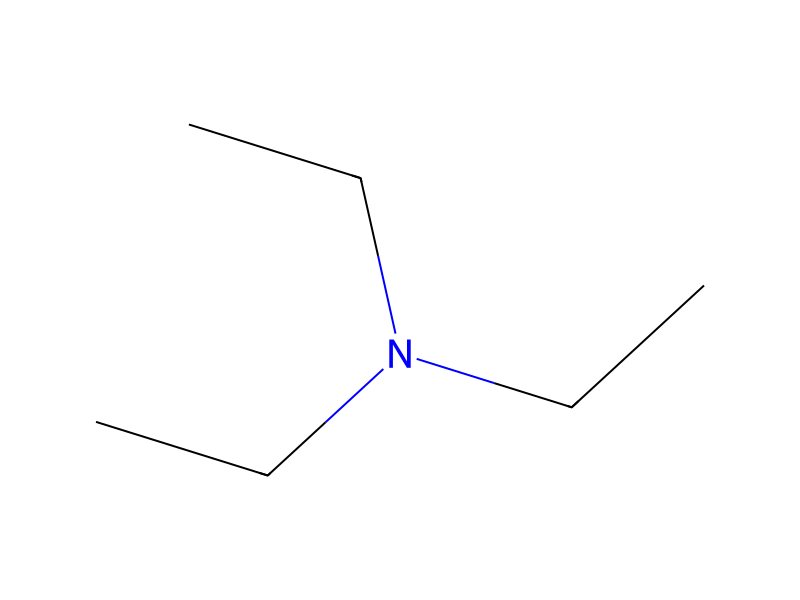
Triethylamine → HCID 58234722, compound
Reaction equation

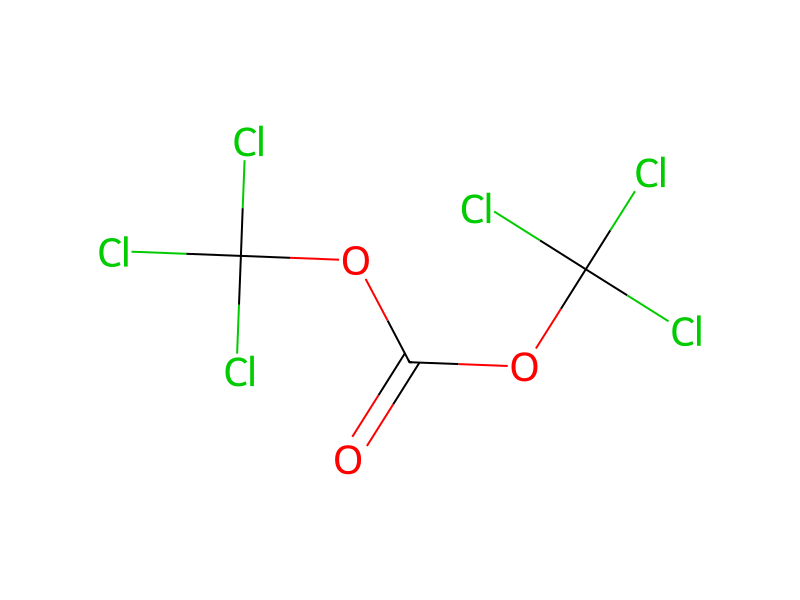
[CH3:1][C:2]1([CH3:8])[O:6][C:5](=[O:7])[NH:4][CH2:3]1.ClC(Cl)(O[C:13](=[O:19])[O:14][C:15](Cl)(Cl)Cl)Cl.C(N(CC)CC)C.[F:28][C:29]1[CH:36]=C(O)[CH:34]=[C:33]([F:38])[C:30]=1[CH:31]=[O:32]>O.C(Cl)Cl.C1COCC1>[CH3:1][C:2]1([CH3:8])[O:6][C:5](=[O:7])[N:4]([C:13]([O:14][C:15]2[CH:36]=[C:29]([F:28])[C:30]([CH:31]=[O:32])=[C:33]([F:38])[CH:34]=2)=[O:19])[CH2:3]1Participants
Reactant 4


Product 1

Reagents, catalysts & solvents 3
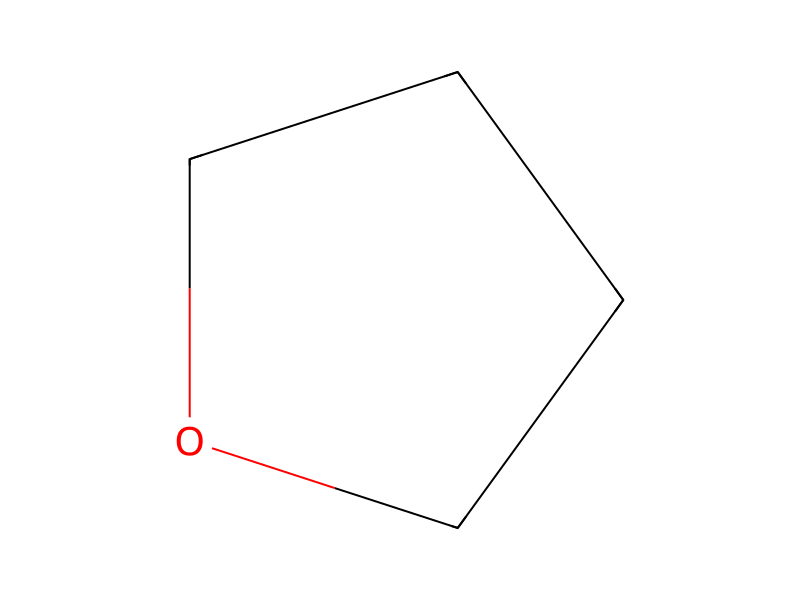
Procedure
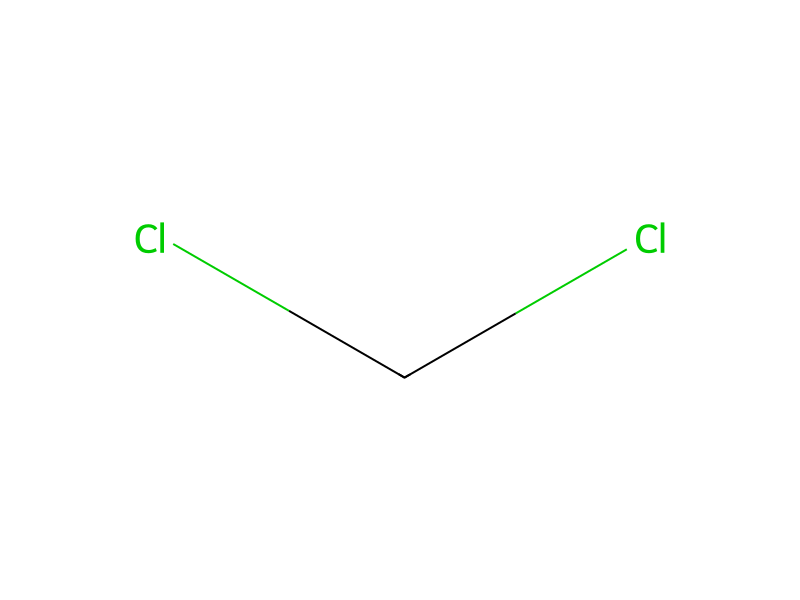
To a 250 mL dry round bottom flask were added 5,5-dimethyl-oxazolidin-2-one (5.10 g, 44.3 mmol), triphosgene (5.26 g, 17.7 mmol) and anhydrous THF (80 mL). The mixture was stirred in an ice-water bath, then triethylamine (8.6 mL, 62.0 mmol) was added slowly. The resulting mixture was stirred at room temperature overnight. The reaction mixture was filtered and the filtrate was concentrated. To the residue was added 2,6-difluoro-4-hydroxybenzaldehyde (5.03 g, 31.9 mmol) and 80 mL of CH2Cl2. The resulting solution was cooled in an ice-water bath, then triethylamine (6.0 mL, 42.5 mmol) was added. After stirring at room temperature for 7 hours, water (100 mL) was added to the reaction mixture. The CH2Cl2 layer was separated, and the aqueous layer was extracted continually with CH2Cl2 (50 mL×3). The combined CH2Cl2 solution was dried over Na2SO4. After removal of the solvent, the residue was purified with a silica gel chromatography (heptane/ethyl acetate, gradient eluting) to give 3,5-difluoro-4-formylphenyl 5,5-dimethyl-2-oxooxazolidine-3-carboxylate (6.9 g) as a pale yellow crystal. Yield: 52%. 1H NMR (CDCl3, 300 MHz): δ=10.39 (s, 1H), 7.09 (d, J=9.0 Hz, 2H), 3.97 (s, 2H), 1.67 (s, 6H).
Workup
- customTo a 250 mL dry round bottom flask
- stirringThe resulting mixture was stirred at room temperature overnight
- filtrationThe reaction mixture was filtered
- concentrationthe filtrate was concentrated
- temperatureThe resulting solution was cooled in an ice-water bath
- stirringAfter stirring at room temperature for 7 hours
- customThe CH2Cl2 layer was separated
- extractionthe aqueous layer was extracted continually with CH2Cl2 (50 mL×3)
- dry with materialThe combined CH2Cl2 solution was dried over Na2SO4
- customAfter removal of the solvent
- customthe residue was purified with a silica gel chromatography (heptane/ethyl acetate, gradient eluting)
Sources & evidence
- ORD record
- ord-90b80955cadc4724b7431f2c55b7b4e8
- Source dataset
- uspto-grants-2014_09
- Patent number
- US08822435B2
Reaction notes
Loading…