Hydrochloric Acid → Phenanthren-2-ylboronic acid
Reaction equation

I[C:2]1[CH:15]=[CH:14][C:13]2[C:12]3[C:7](=[CH:8][CH:9]=[CH:10][CH:11]=3)[CH:6]=[CH:5][C:4]=2[CH:3]=1.C([Li])CCC.[B:21](OC(C)C)([O:26]C(C)C)[O:22]C(C)C.Cl>CCCCCC.CCOCC>[CH:3]1[C:4]2[CH:5]=[CH:6][C:7]3[C:12](=[CH:11][CH:10]=[CH:9][CH:8]=3)[C:13]=2[CH:14]=[CH:15][C:2]=1[B:21]([OH:26])[OH:22]Participants

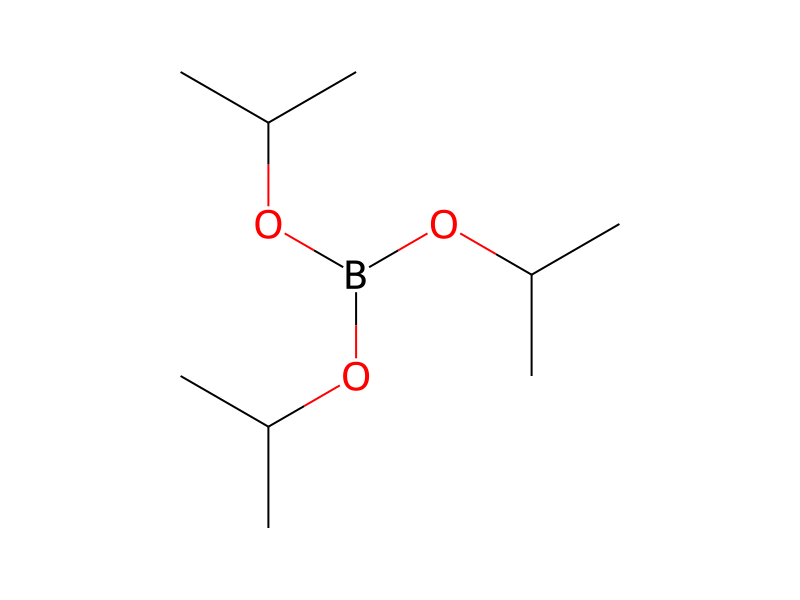





Conditions
- Temperature
- -60 °C
Procedure
Under an argon atmosphere, 98 g of 2-iodophenanthrene and 3 L of dehydrated ether were loaded, and then the reaction solution was cooled to −60° C. After that, 210 mL of a 1.6-M solution of n-butyllithium in hexane were added to the reaction solution. The reaction solution was stirred for 1 hour while its temperature was increased to 0° C. The reaction solution was cooled to −60° C. again, and then a solution of 151 g of triisopropyl borate in 100 mL of dehydrated ether was dropped to the reaction solution. The reaction solution was continuously stirred for 5 hours while its temperature was increased to room temperature. Subsequently, 1 L of a 10% aqueous solution of hydrochloric acid was added to the reaction solution, and then the mixture was stirred for 1 hour. The water layer was removed, and the organic layer was washed with water and a saturated salt solution, and was then dried with magnesium sulfate. After magnesium sulfate had been separated by filtration, the organic layer was concentrated. The resultant solid was washed with hexane and toluene. Thus, 42 g of phenanthrene-2-boronic acid as a target were obtained (in 58% yield).
Workup
- temperaturewas increased to 0° C
- temperatureThe reaction solution was cooled to −60° C. again
- stirringThe reaction solution was continuously stirred for 5 hours while its temperature
- temperaturewas increased to room temperature
- stirringthe mixture was stirred for 1 hour
- customThe water layer was removed
- washthe organic layer was washed with water
- dry with materiala saturated salt solution, and was then dried with magnesium sulfate
- customAfter magnesium sulfate had been separated by filtration
- concentrationthe organic layer was concentrated
- washThe resultant solid was washed with hexane and toluene
Sources & evidence
- ORD record
- ord-6f250273fbb744f78defc633a419ca2b
- Source dataset
- uspto-grants-2014_09
- Patent number
- US08822041B2
Reaction notes
Loading…