Benzenepropanoic acid → HCID 4228842, compound
Reaction equation

C1(N=C=NC2CCCCC2)CCCCC1.[CH2:16]([N:23]1[CH2:28][CH2:27][NH:26][CH2:25][CH2:24]1)[C:17]1[CH:22]=[CH:21][CH:20]=[CH:19][CH:18]=1.[C:29]1([CH2:35][CH2:36][C:37](O)=[O:38])[CH:34]=[CH:33][CH:32]=[CH:31][CH:30]=1>O1CCCC1>[CH2:16]([N:23]1[CH2:28][CH2:27][N:26]([C:37](=[O:38])[CH2:36][CH2:35][C:29]2[CH:34]=[CH:33][CH:32]=[CH:31][CH:30]=2)[CH2:25][CH2:24]1)[C:17]1[CH:18]=[CH:19][CH:20]=[CH:21][CH:22]=1Participants
5
Reactant 3


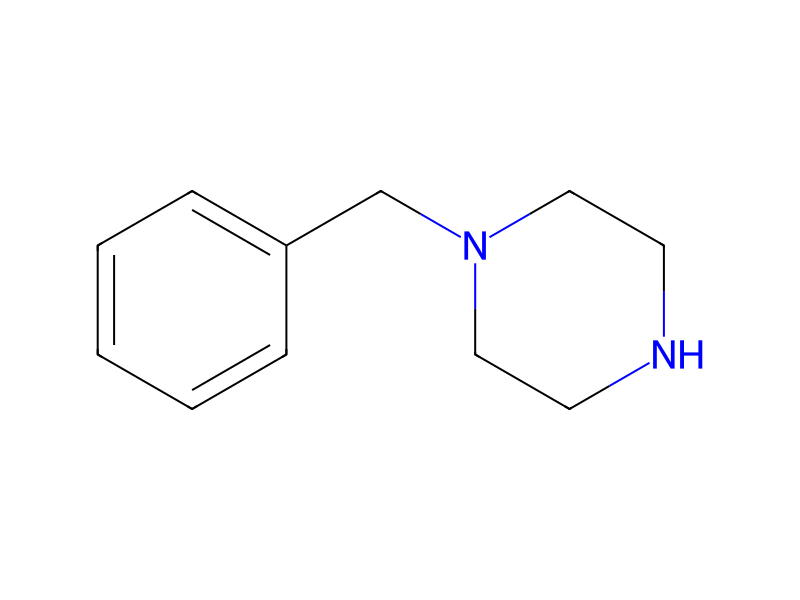
Product 1

Reagents, catalysts & solvents 1

Procedure
Dicyclohexylcarbodiimide (4.5 g) was added to a mixture of 3.52 g of 1-benzylpiperazine, 3.5 g of 3-phenylpropionic acid and 20 ml of tetrahydrofuran, and the mixture was stirred overnight at room temperature. The resultant dicyclohexylurea was filtered off, and the mother liquor was concentrated under reduced pressure. Ethyl acetate (100 ml) and 50 ml of water were added to the residue, and the mixture was made alkaline with potassium carbonate and then allowed to undergo phase separation. The ethyl acetate layer was washed in sequence with water and saturated aqueous solution of sodium chloride, dried over anhydrous sodium sulfate and concentrated under reduced pressure to give 6 g of 1-benzyl-4-(3-phenylpropionyl)piperazine.
Workup
- filtrationThe resultant dicyclohexylurea was filtered off
- concentrationthe mother liquor was concentrated under reduced pressure
- additionEthyl acetate (100 ml) and 50 ml of water were added to the residue
- customphase separation
- washThe ethyl acetate layer was washed in sequence with water and saturated aqueous solution of sodium chloride
- dry with materialdried over anhydrous sodium sulfate
- concentrationconcentrated under reduced pressure
Sources & evidence
- ORD record
- ord-be7d3404621146bd853702aed32c0eb1
- Source dataset
- uspto-grants-1991_01
- Patent number
- US04987132
Reaction notes
Loading…