Isopropanol → Ethyl 4-oxocyclohexanecarboxylate
Reaction equation

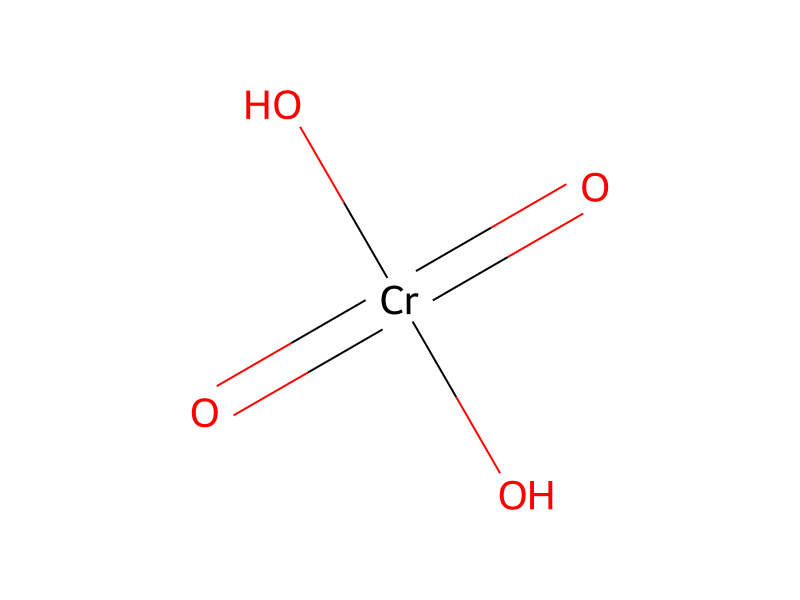
[OH:1][C:2]1[CH:12]=[CH:11][C:5]([C:6]([O:8][CH2:9][CH3:10])=[O:7])=[CH:4][CH:3]=1.OC1CCC(C(OCC)=O)CC1.[Cr](O)(O)(=O)=O.C(O)(C)C>CC(C)=O>[O:1]=[C:2]1[CH2:12][CH2:11][CH:5]([C:6]([O:8][CH2:9][CH3:10])=[O:7])[CH2:4][CH2:3]1Participants
Reactant 4



Product 1

Reagents, catalysts & solvents 1

Conditions
- Temperature
- 0 °C
Procedure
Ethyl 4-hydroxybenzoate is reduced to ethyl 4-hydroxycyclohexanecarboxylate according to the procedure described in R. A. Finnegan and P. L. Bachman, Journal of Organic Chemistry, Volume 30, pages 4145-4150 (1965). The crude material obtained in this reduction (190 g) is dissolved in 1200 ml of reagent grade acetone. The solution is cooled to 0° C. and 152 ml of a 8 N chromic acid solution (prepared from concentrated sulfuric acid and chromium trioxide) is added dropwise to the mechanically stirred reaction mixture. Enough isopropanol is added to the mixture to discharge its red color and it is then filtered through Celite. The salts are washed with several portions of acetone. The filtrate is evaporated in vacuo. The residue is dissolved in 750 ml of diethyl ether and washed with sodium bicarbonate and brine solutions. After drying, the solvent is evaporated and the residue is distilled to yield the title compound; bp12 125 ° C.
Workup
- customThe crude material obtained in this reduction (190 g)
- filtrationis then filtered through Celite
- washThe salts are washed with several portions of acetone
- customThe filtrate is evaporated in vacuo
- dissolutionThe residue is dissolved in 750 ml of diethyl ether
- washwashed with sodium bicarbonate and brine solutions
- customAfter drying
- customthe solvent is evaporated
- distillationthe residue is distilled
Sources & evidence
- ORD record
- ord-9d2f61070bd24a54863587cd2cc0c9be
- Source dataset
- uspto-grants-1991_01
- Patent number
- US04988699
Reaction notes
Loading…