Ammonium Acetate → HCID 178446240, compound
Reaction equation

CN(C)/[N:3]=[CH:4]/[C:5](=O)[C:6]([F:9])([F:8])[F:7].C([O-])(=O)C.[NH4+:16].[CH:17]1([C:20]2[C:21]([N:38]([CH2:43][CH2:44][CH:45]([CH3:47])[CH3:46])[S:39]([CH3:42])(=[O:41])=[O:40])=[CH:22][C:23]3[O:27][C:26]([C:28]4[CH:33]=[CH:32][C:31]([F:34])=[CH:30][CH:29]=4)=[C:25]([CH:35]=O)[C:24]=3[CH:37]=2)[CH2:19][CH2:18]1.C(OCC)(=O)C.C(Cl)Cl>C(O)(=O)C.C(OCC)(=O)C>[CH:17]1([C:20]2[C:21]([N:38]([CH2:43][CH2:44][CH:45]([CH3:47])[CH3:46])[S:39]([CH3:42])(=[O:40])=[O:41])=[CH:22][C:23]3[O:27][C:26]([C:28]4[CH:33]=[CH:32][C:31]([F:34])=[CH:30][CH:29]=4)=[C:25]([C:35]4[NH:3][CH:4]=[C:5]([C:6]([F:7])([F:8])[F:9])[N:16]=4)[C:24]=3[CH:37]=2)[CH2:19][CH2:18]1Participants


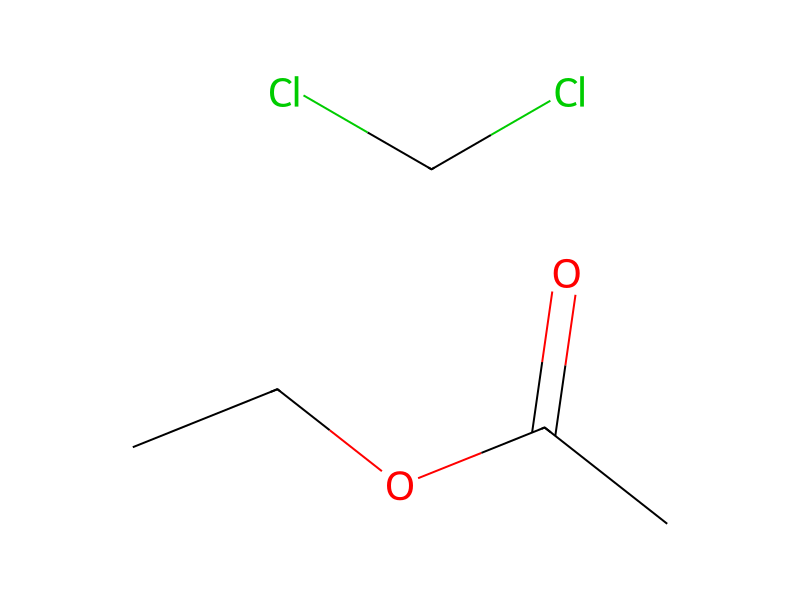




Procedure
To a mixture of (E)-3-(2,2-dimethylhydrazono)-1,1,1-trifluoropropan-2-one (9.48 mg, 0.056 mmol) and ammonium acetate (174 mg, 2.255 mmol) in acetic acid (450 μL) was added solid N-(5-cyclopropyl-2-(4-fluorophenyl)-3-formylbenzofuran-6-yl)-N-isopentylmethanesulfonamide (50 mg, 0.113 mmol, prepared as described in Kamitori Y, et al. J Organic Chemistry 1988; 53: 129-135) under nitrogen, and the mixture was stirred at room temperature for one hour. The mixture was heated at 80° C. for 18 hours. TLC (SiO2, 2% ethyl acetate/CH2Cl2) showed none of the trifluoroacylhydrazone reagent remaining, so additional (E)-3-(2,2-dimethylhydrazono)-1,1,1-trifluoropropan-2-one (9.48 mg, 0.056 mmol) was added and the mixture was continued to heat at 80° C. After 27 hours, additional (E)-3-(2,2-dimethylhydrazono)-1,1,1-trifluoropropan-2-one (9.48 mg, 0.056 mmol) was added and the mixture was heated overnight at 80° C. LCMS after a total of 42 hours showed ˜1:1 starting material to product ratio. The amber-brown colored reaction was cooled to room temperature, and ethyl acetate (50 mL) was added. The mixture was washed with saturated aqueous NaHCO3 (25 mL), the organic phase was dried over anhydrous Na2SO4, filtered, and concentrated by rotary evaporation. The residue was purified by SiO2 flash chromatography (Alltech Extract-Clean™ column, 10 g bed) eluting with a step gradient of 2% to 3% ethyl acetate in CH2Cl2 to afford the title compound as a light yellow solid (7.2 mg, 0.013 mmol, 11%). 1H NMR (500 MHz, DMSO-d6) δ ppm 0.53-0.61 (m, 1H), 0.80-0.90 (m, 1H), 0.83 (t, J=6.18 Hz, 6H), 0.97-1.02 (m, 2H), 1.22-1.31 (m, 1H), 1.34-1.44 (m, 1H), 1.54-1.69 (m, 1H), 2.35-2.44 (m, 1H), 3.14 (s, 3H), 3.61-3.79 (m, 2H), 7.09 (s, 1H), 7.35 (t, J=8.93 Hz, 2H), 7.90 (s, 1H), 7.92 (dd, J=8.47, 5.72 Hz, 2H), 8.01 (s, 1H), 13.13 (s, 1H); MS (ESI+) m/z 550 (M+H)+, 1099 (2M+H)+; MS (ESI−) m/z 548 (M−H)−, 1097 (2M−H)−.
Workup
- temperatureThe mixture was heated at 80° C. for 18 hours
- temperatureto heat at 80° C
- waitAfter 27 hours
- temperaturethe mixture was heated overnight at 80° C
- customafter a total of 42 hours
- customThe amber-brown colored reaction
- temperaturewas cooled to room temperature
- washThe mixture was washed with saturated aqueous NaHCO3 (25 mL)
- dry with materialthe organic phase was dried over anhydrous Na2SO4
- filtrationfiltered
- concentrationconcentrated by rotary evaporation
- customThe residue was purified by SiO2 flash chromatography (Alltech Extract-Clean™ column, 10 g bed)
- washeluting with a step gradient of 2% to 3% ethyl acetate in CH2Cl2
Sources & evidence
- ORD record
- ord-698a82011177427688ce0f18fe84528d
- Source dataset
- uspto-grants-2015_11
- Patent number
- US09173887B2
Reaction notes
Loading…