Pivaloyl chloride → HCID 58224024, compound
Reaction equation

[O:1]=[CH:2][C@@H:3]([C@H:5]([C@@H:7]([C@@H:9]([CH2:11][OH:12])[OH:10])[OH:8])[OH:6])[OH:4].[C:13](Cl)(=[O:18])[C:14]([CH3:17])([CH3:16])[CH3:15]>ClCCl.CN(C1C=CN=CC=1)C>[CH3:15][C:14]([CH3:17])([CH3:16])[C:13]([O:1][C@@H:2]1[C@H:3]([O:4][C:13](=[O:18])[C:14]([CH3:17])([CH3:16])[CH3:15])[C@@H:5]([O:6][C:13](=[O:18])[C:14]([CH3:17])([CH3:16])[CH3:15])[C@H:7]([O:8][C:13](=[O:18])[C:14]([CH3:17])([CH3:16])[CH3:15])[C@@H:9]([CH2:11][O:12][C:13](=[O:18])[C:14]([CH3:17])([CH3:16])[CH3:15])[O:10]1)=[O:18]Participants
Reactant 2

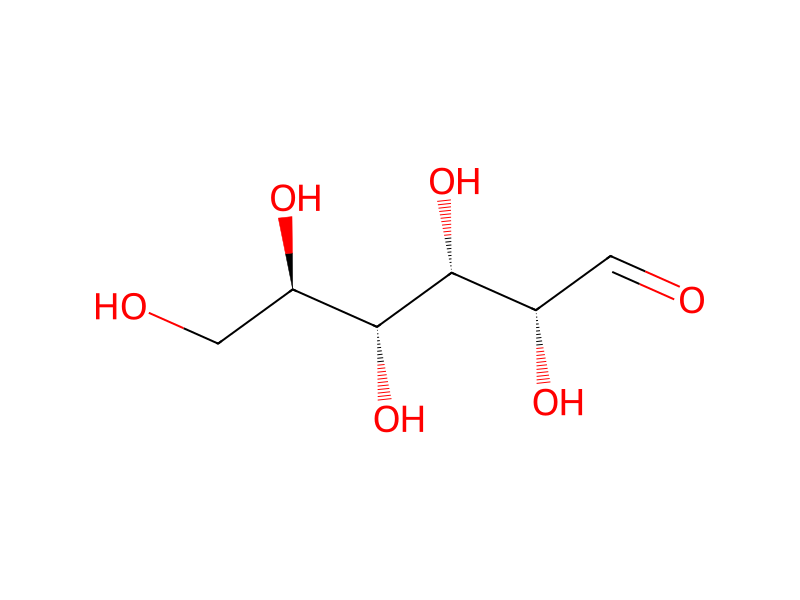
Product 1

Reagents, catalysts & solvents 2


Procedure
D-glucose (25.0 g, 0.139 mol) was suspended in anhydrous dichloromethane (416 mL) under nitrogen and the resulting mixture was stirred for 5 minutes at room temperature, then cooled to 0° C. and stirred for 10 minutes. To the resulting mixture was then added TEA (154.7 mL), dropwise over about 10-15 min, with stirring; then DMAP (1.25 g, 0.0102 mol) in one portion. To the resulting mixture was added pivaloyl chloride (136 mL) diluted with dichloromethane (83 mL) at 0° C., over 30 min. The ice bath was removed and the resulting mixture stirred at room temperature for 20 hours. The resulting mixture was then poured into dichloromethane (500 mL) and hydrochloric acid (1.5M, 375 mL) and the resulting phases separated. The organic layer was washed with sodium bicarbonate solution (550 g in 500 mL DI water, 1N) and then evaporated to a small volume. To the resulting residue was added ethanol (95%, 240 mL) and the mixture heated to reflux temperature to yield a homogeneous mixture. The resulting mixture was cooled to 0° C., resulting in the formation of white crystals, which were filtered and dried in vacuo at room temperature, overnight, to yield the title compound.
Workup
- temperaturecooled to 0° C.
- stirringstirred for 10 minutes
- stirringwith stirring
- customThe ice bath was removed
- stirringthe resulting mixture stirred at room temperature for 20 hours
- additionThe resulting mixture was then poured into dichloromethane (500 mL) and hydrochloric acid (1.5M, 375 mL)
- customthe resulting phases separated
- washThe organic layer was washed with sodium bicarbonate solution (550 g in 500 mL DI water, 1N)
- customevaporated to a small volume
- additionTo the resulting residue was added ethanol (95%, 240 mL)
- temperaturethe mixture heated
- temperatureto reflux temperature
- customto yield a homogeneous mixture
- temperatureThe resulting mixture was cooled to 0° C.
- customresulting in the formation of white crystals, which
- filtrationwere filtered
- customdried in vacuo at room temperature, overnight
Sources & evidence
- ORD record
- ord-874ce815cf1646998c34f66d479b622c
- Source dataset
- uspto-grants-2015_11
- Patent number
- US09174971B2
Reaction notes
Loading…