1,4-Dibromobutane → HCID 86694108, compound
Reaction equation

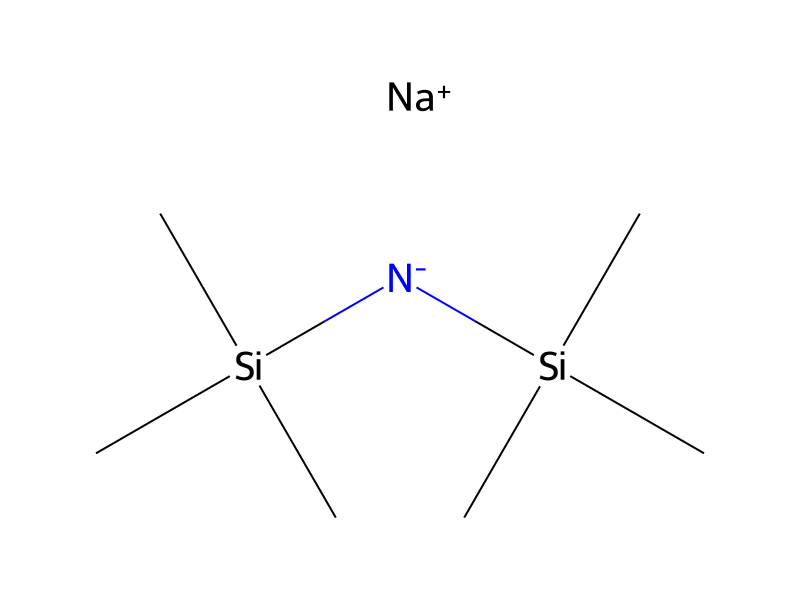
[Cl:1][C:2]1[C:7]([CH2:8][C:9]#[N:10])=[CH:6][CH:5]=[CH:4][N:3]=1.Br[CH2:12][CH2:13][CH2:14][CH2:15]Br.C[Si]([N-][Si](C)(C)C)(C)C.[Na+]>O1CCCC1>[Cl:1][C:2]1[C:7]([C:8]2([C:9]#[N:10])[CH2:15][CH2:14][CH2:13][CH2:12]2)=[CH:6][CH:5]=[CH:4][N:3]=1Participants
Reactant 3


Product 1

Reagents, catalysts & solvents 1

Procedure
2-(2-Chloropyridin-3-yl)acetonitrile (0.280 g, 1.835 mmol) was dissolved in dry tetrahydrofuran (1.5 mL) under nitrogen and cooled in an ice bath. 1,4-Dibromobutane (0.220 ml, 1.842 mmol) was added followed by dropwise addition of sodium bis(trimethylsilyl)amide (1.0 M in tetrahydrofuran, 4.5 ml, 4.50 mmol). The mixture was stirred for 20 minutes then quenched by addition of saturated ammonium chloride (10 mL). Water (100 mL) and ethyl acetate (200 mL) were added and the phases mixed and separated. The organic was dried with magnesium sulfate and evaporated to dryness under reduced pressure. Purification using silica chromatography (hexane to ethyl acetate gradient) gave the desired 1-(2-chloropyridin-3-yl)cyclopentanecarbonitrile (0.252 g, 1.219 mmol, 66.4% yield).
Workup
- temperaturecooled in an ice bath
- customthen quenched by addition of saturated ammonium chloride (10 mL)
- additionWater (100 mL) and ethyl acetate (200 mL) were added
- additionthe phases mixed
- customseparated
- dry with materialThe organic was dried with magnesium sulfate
- customevaporated to dryness under reduced pressure
- customPurification
Sources & evidence
- ORD record
- ord-ee49a0b97da04fe2ab5a0ad1087ed3d8
- Source dataset
- uspto-grants-2015_11
- Patent number
- US09174992B2
Reaction notes
Loading…