4-Hydroxybenzaldehyde → 4-Butoxy-3-chlorobenzaldehyde
Reaction equation

Br[CH2:2][CH2:3][CH2:4][CH3:5].[Cl:6][C:7]1[CH:8]=[C:9]([CH:12]=[CH:13][C:14]=1[OH:15])[CH:10]=[O:11].BrCCC.OC1C=CC(C=O)=CC=1>>[CH2:2]([O:15][C:14]1[CH:13]=[CH:12][C:9]([CH:10]=[O:11])=[CH:8][C:7]=1[Cl:6])[CH2:3][CH2:4][CH3:5]Participants
5



Procedure
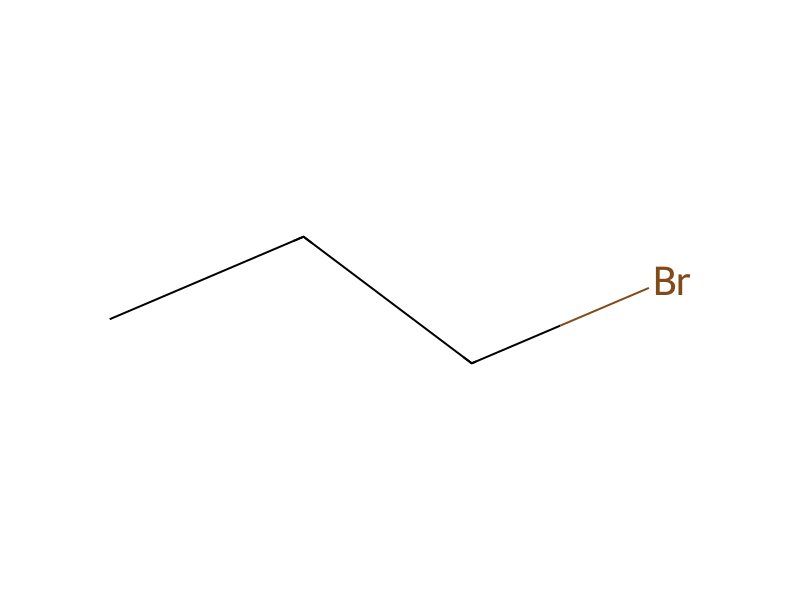
When the 1-bromobutane and 3-chloro-4-hydroxybenzaldehyde was substituted for 1-bromopropane and 4-hydroxybenzaldehyde in Example 50, Step A, the identical process afforded the title compound in 86% yield, as light yellow oil. 1H-NMR (CDCl3) 0.98 (tr, 3H); 1.56-1.58 (m, 2H); 1.78-1.88 (m, 2H); 4.1 (tr, 2H, J=6.3 Hz); 6.98 (d, 1H, J=7.17 Hz); 7.71 (dd, 1H, J=2.1, 8., Hz); 7.87 (d, 1H, J=2.1 Hz); 9.81 (s, 1H).
Sources & evidence
- ORD record
- ord-62d8584e4fa1435db87bf3ad8959b71c
- Source dataset
- uspto-grants-2015_11
- Patent number
- US09181182B2
Reaction notes
Loading…