Triethylamine → 8-bromo-[1,2,4]triazolo[4,3-a]quinoxalin-1(2H)-one
Reaction equation
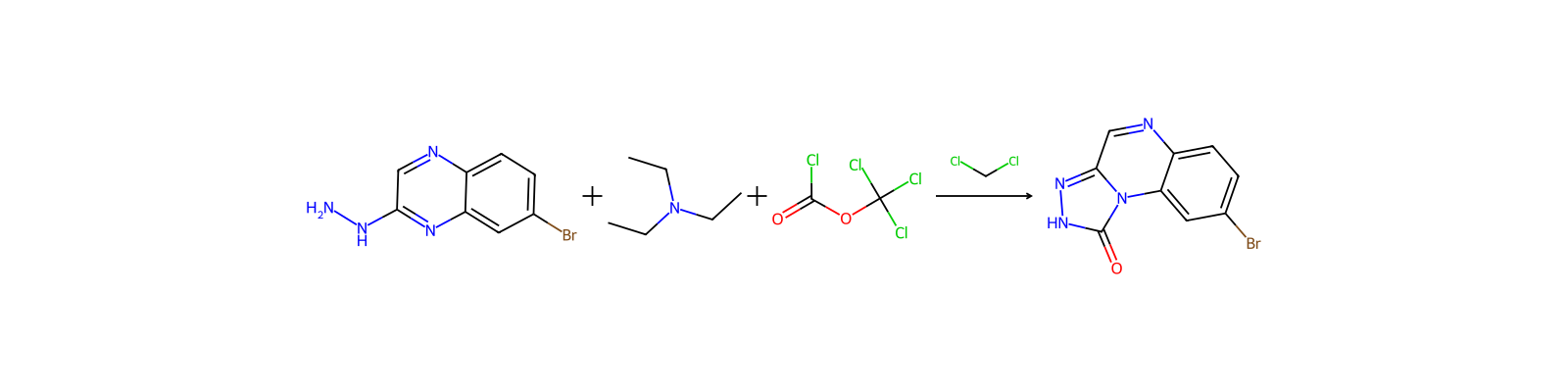
[Br:1][C:2]1[CH:11]=[C:10]2[C:5]([N:6]=[CH:7][C:8]([NH:12][NH2:13])=[N:9]2)=[CH:4][CH:3]=1.C(N(CC)CC)C.[O:21]=[C:22](Cl)OC(Cl)(Cl)Cl>ClCCl>[Br:1][C:2]1[CH:11]=[C:10]2[C:5]([N:6]=[CH:7][C:8]3[N:9]2[C:22](=[O:21])[NH:13][N:12]=3)=[CH:4][CH:3]=1Participants
5
Reactant 3


Product 1

Reagents, catalysts & solvents 1

Procedure
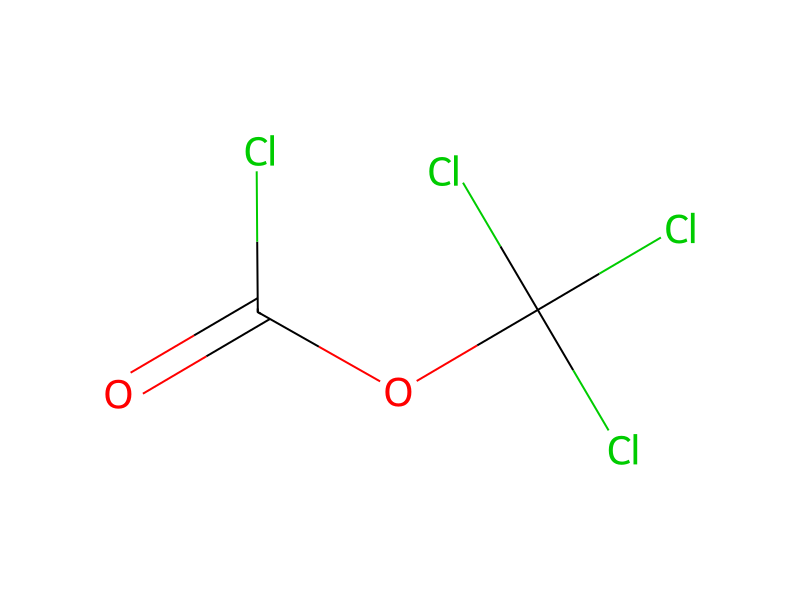
To the solution of 7-bromo-2-hydrazinylquinoxaline (200 mg, 0.83 mmol) in dichloromethane (5 mL) was added triethylamine (0.175 mL, 1.2 mmol), then the solution of diphosgene (0.055 mL, 0.46 mmol) in dichloromethane was added dropwise at 0° C. with stirring under nitrogen atmosphere. After stirring at r.t. for 5 h, the solvent was removed under vacuum, the residue was washed with water, and dried in vacuo to afford the title product 8-bromo-[1,2,4]triazolo[4,3-a]quinoxalin-1(2H)-one as yellow solid in 82% yield (180 mg). m/z 265 (M+H)+.
Workup
- stirringAfter stirring at r.t. for 5 h
- customthe solvent was removed under vacuum
- washthe residue was washed with water
- customdried in vacuo
Sources & evidence
- ORD record
- ord-84a79d67dcf54646bf5417f0a12d5ace
- Source dataset
- uspto-grants-2015_11
- Patent number
- US09181264B2
Reaction notes
Loading…