Iodine → HCID 178433768, compound
Reaction equation

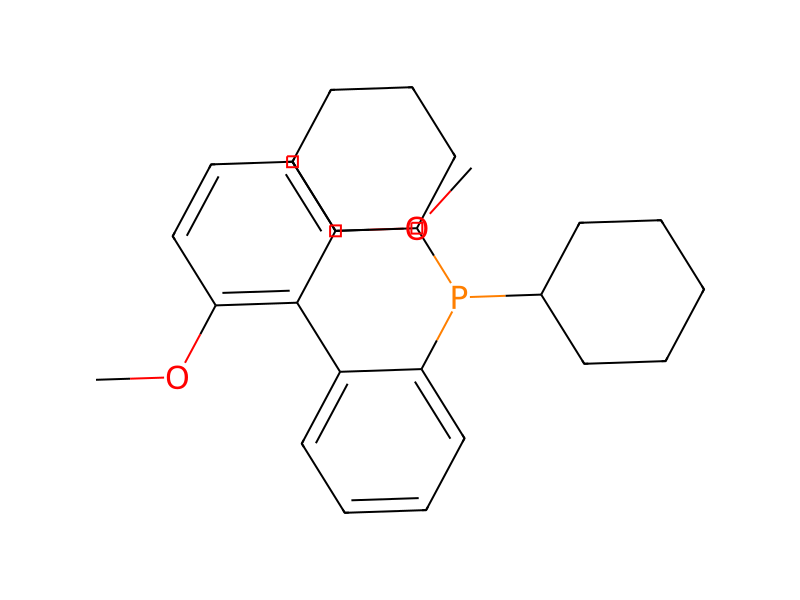
[Cl-].[Li+].BrCCBr.Cl[Si](C)(C)C.II.I[C@H:15]1[CH2:20][CH2:19][C@H:18]([CH2:21][C:22]#[N:23])[CH2:17][CH2:16]1.Br[C:25]1[C:26]([CH3:37])=[N:27][N:28]2[C:33]=1[C:32]1[S:34][CH:35]=[CH:36][C:31]=1[N:30]=[CH:29]2.C1(P(C2CCCCC2)C2C=CC=CC=2C2C(OC)=CC=CC=2OC)CCCCC1>C1COCC1.C1(C)C=CC=CC=1.[Zn]>[CH3:37][C:26]1[C:25]([C@H:15]2[CH2:20][CH2:19][C@H:18]([CH2:21][C:22]#[N:23])[CH2:17][CH2:16]2)=[C:33]2[N:28]([CH:29]=[N:30][C:31]3[CH:36]=[CH:35][S:34][C:32]=32)[N:27]=1Participants
Reactant 7






Product 1

Reagents, catalysts & solvents 3



Conditions
- Temperature
- 140 °C
Procedure
A microwave tube equipped with a magnetic stir bar and a rubber septum was charged with lithium chloride (44.9 mg, 1.06 mmol). The vial was heated at 140° C. for 10 min under high vacuum and backfilled with nitrogen after cooling to room temperature. Zinc (69.3 mg, 1.06 mmol) was added and the vial was heated at 140° C. for 10 min under high vacuum and backfilled with nitrogen. After cooling to room temperature, THF (0.6 mL) and 1,2-dibromoethane (3.4 μL, 0.040 mmol) was added via syringe. The mixture was heated at 60° C. for 10 min and then cooled to room temperature. Chlorotrimethylsilane (0.99 μL, 0.0078 mmol) and iodine (1.0 mg, 0.0039 mmol) in THF (0.2 mL) was added and stirred at 60° C. for 10 min and cooled to room temperature. (trans-4-Iodocyclohexyl)acetonitrile (132 mg, 0.53 mmol) in THF (0.2 mL) was then added, and the mixture stirred at 50° C. overnight. 9-Bromo-8-methylpyrazolo[1,5-c]thieno[2,3-e]pyrimidine (80.2 mg, 0.299 mmol), 2-(dicyclohexylphosphino)-2′,6′-dimethoxy-1,1′-biphenyl (29 mg, 0.072 mmol) in toluene (0.2 mL) were added to a microwave vial. The vial was evacuated under high vacuum and backfilled with nitrogen. The mixture was cooled to 0° C. and the zinc reagent was added slowly via syringe. After addition, the reaction was heated to 60° C. overnight and partitioned between EtOAc and saturated NH4Cl solution. The layers were separated and the aqueous extracted further with ethyl acetate (2×). The combined organics were washed with water and brine, dried over MgSO4, and concentrated. The residue was dissolved in methanol and purified with preparative LCMS (XBridge C18 column, eluting with a gradient of acetonitrile/water containing 0.1% ammonium hydroxide, at flow rate of 60 mL/min) to give a colorless solid (5.3 mg, 5.7%). LCMS calculated for C17H19N4S (M+H)+: m/z=311.1. Found: 311.1. 1H NMR (500 MHz, CDCl3) δ 8.96 (s, 1H), 7.59 (m, 1H), 7.49 (m, 1H), 2.90 (m, 1H), 2.51 (s, 3H), 2.36 (d, J=6.5 Hz, 2H), 2.06 (m, 2H), 1.97-1.88 (m, 5H), 1.37 (m, 2H). ppm.
Workup
- customA microwave tube equipped with a magnetic stir bar
- temperatureafter cooling to room temperature
- temperaturethe vial was heated at 140° C. for 10 min under high vacuum
- temperatureAfter cooling to room temperature
- temperatureThe mixture was heated at 60° C. for 10 min
- temperaturecooled to room temperature
- temperaturecooled to room temperature
- stirringthe mixture stirred at 50° C. overnight
- customThe vial was evacuated under high vacuum
- temperatureThe mixture was cooled to 0° C.
- additionthe zinc reagent was added slowly via syringe
- additionAfter addition
- temperaturethe reaction was heated to 60° C. overnight
- custompartitioned between EtOAc and saturated NH4Cl solution
- customThe layers were separated
- extractionthe aqueous extracted further with ethyl acetate (2×)
- washThe combined organics were washed with water and brine
- dry with materialdried over MgSO4
- concentrationconcentrated
- dissolutionThe residue was dissolved in methanol
- custompurified with preparative LCMS (XBridge C18 column
- washeluting with a gradient of acetonitrile/water containing 0.1% ammonium hydroxide, at flow rate of 60 mL/min)
Sources & evidence
- ORD record
- ord-04e6d42288dd43769c5bc68d99dde47c
- Source dataset
- uspto-grants-2015_11
- Patent number
- US09181271B2
Reaction notes
Loading…