1-Bromo-2-methylpropane → Methyl 4-(isobutylthio)benzoate
Reaction equation

C(=O)([O-])[O-].[K+].[K+].[SH:7][C:8]1[CH:17]=[CH:16][C:11]([C:12]([O:14][CH3:15])=[O:13])=[CH:10][CH:9]=1.Br[CH2:19][CH:20]([CH3:22])[CH3:21]>CN(C=O)C>[CH2:19]([S:7][C:8]1[CH:9]=[CH:10][C:11]([C:12]([O:14][CH3:15])=[O:13])=[CH:16][CH:17]=1)[CH:20]([CH3:22])[CH3:21]Participants
Reactant 3
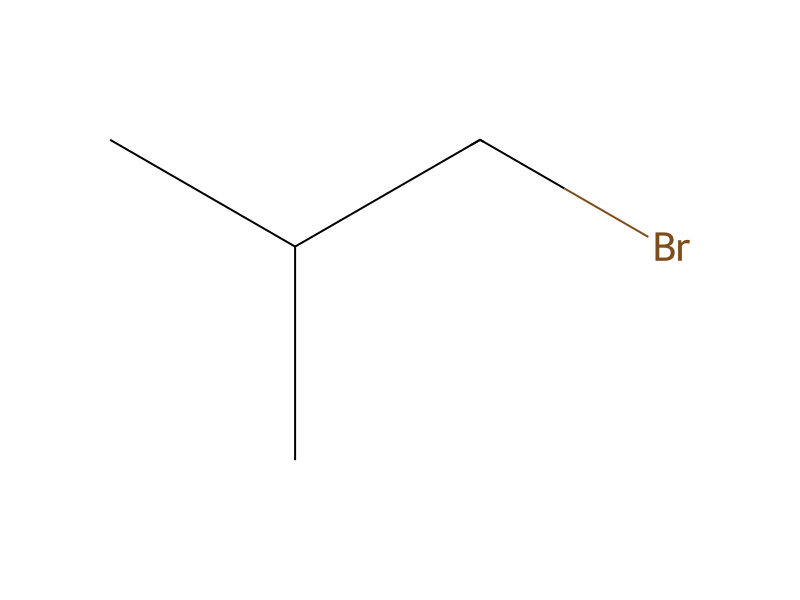


Product 1

Reagents, catalysts & solvents 1

Procedure
Potassium carbonate (1.2 g, 8.9 mmol) was added to a mixture of methyl 4-sulfanylbenzoate (1.0 g, 6.0 mmol), 1-bromo-2-methyl-propane (1.2 g, 970 μL, 8.9 mmol), and DMF (10 mL) at room temperature. The reaction mixture was allowed to stir for 4 hours and the resulting solid was removed by filtration. The filtrate were partitioned between ethyl acetate (100 mL) and water (100 mL). The layers were separated and the organic layer was washed with brine solution, then dried over sodium sulfate, filtered and concentrated in vacuo to give methyl 4-isobutylsulfanylbenzoate (1.1 g, 83%) as a clear oil. ESI-MS m/z calc. 242.0. found 243.2 (M+1)+; Retention time: 1.73 minutes (3 min run). 1H NMR (400 MHz, CDCl3) δ 8.30 (d, J=8.3 Hz, 2H), 8.05 (d, J=8.3 Hz, 2H), 3.03 (d, J=6.5 Hz, 2H), 2.27 (dt, J=13.3, 6.6 Hz, 1H), 1.08 (d, J=6.7 Hz, 6H).
Workup
- customthe resulting solid was removed by filtration
- customThe filtrate were partitioned between ethyl acetate (100 mL) and water (100 mL)
- customThe layers were separated
- washthe organic layer was washed with brine solution
- dry with materialdried over sodium sulfate
- filtrationfiltered
- concentrationconcentrated in vacuo
Sources & evidence
- ORD record
- ord-f7eac7b69dbc4ad093adeb26379e0d39
- Source dataset
- uspto-grants-2015_11
- Patent number
- US09181273B2
Reaction notes
Loading…