Tetrahydrofuran → Gamma-Butyrolactone
Reaction equation

[H][H].[C:3](OC)(=[O:10])/[CH:4]=[CH:5]\[C:6]([O:8][CH3:9])=[O:7].O1CCCC1>O>[CH2:3]([OH:10])[CH2:4][CH2:5][CH2:6][OH:7].[C:6]1(=[O:7])[O:8][CH2:9][CH2:4][CH2:5]1Participants
6
Reactant 3



Product 2
Reagents, catalysts & solvents 1

Procedure
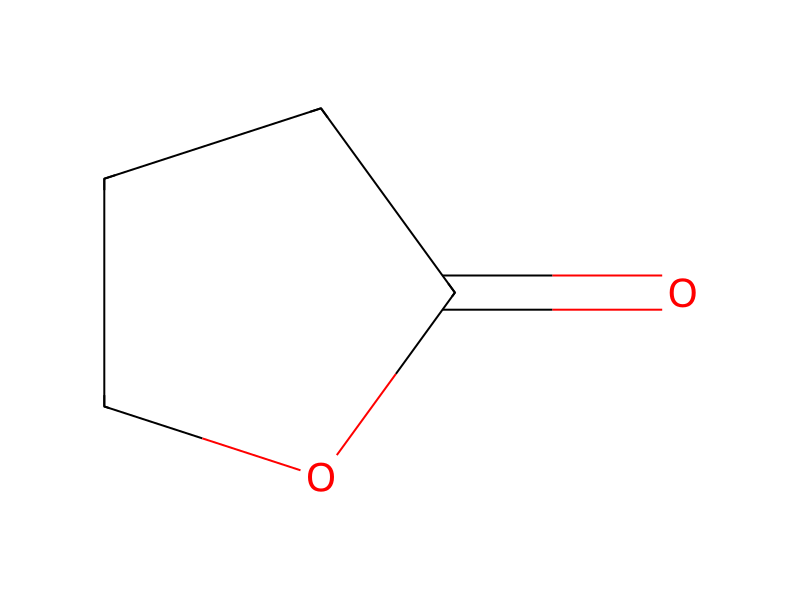
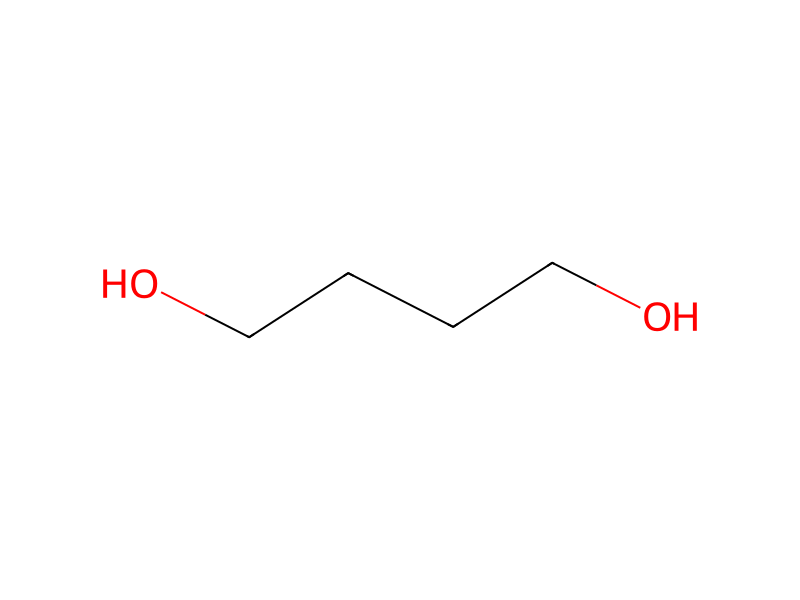
The dialkyl maleate produced in the second esterification stage 13 is fed to a hydrogenation stage 17. For the hydrogenation, hydrogen 19 is also introduced into the hydrogenation stage 17. In the hydrogenation stage 17, the dimethyl maleate is reacted with the hydrogen to form tetrahydrofuran and optionally 1,4-butanediol and/or γ-butyrolactone with simultaneous formation of alkanol and water, as described, for example, in WO 88/00937, WO 91/01960, WO 03/006446 or WO 05/058855. The alkanol formed in the hydrogenation is the same alkanol as that which was introduced in the first esterification stage 9 and second esterification stage 13.
Sources & evidence
- ORD record
- ord-4bda3faa2a3f4f4fa952f63e78a6a6fc
- Source dataset
- uspto-grants-2015_11
- Patent number
- US09186599B2
Reaction notes
Loading…