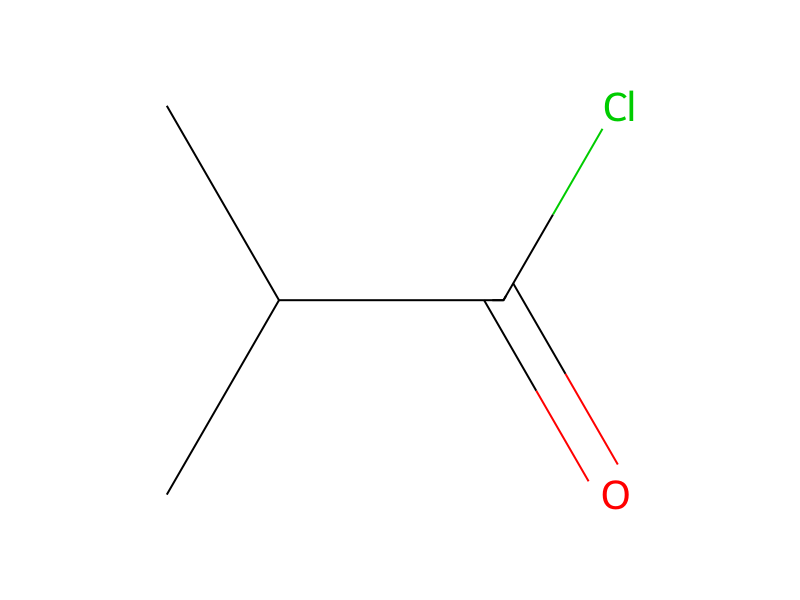
Isobutyryl chloride → (rac)-N-(4-(4-Cyanophenyl)-5,6,7,8-tetrahydroisoquinolin-8-yl)isobutyramide
Reaction equation

[NH2:1][CH:2]1[C:11]2[CH:10]=[N:9][CH:8]=[C:7]([C:12]3[CH:19]=[CH:18][C:15]([C:16]#[N:17])=[CH:14][CH:13]=3)[C:6]=2[CH2:5][CH2:4][CH2:3]1.[C:20](Cl)(=[O:24])[CH:21]([CH3:23])[CH3:22]>>[C:16]([C:15]1[CH:14]=[CH:13][C:12]([C:7]2[C:6]3[CH2:5][CH2:4][CH2:3][CH:2]([NH:1][C:20](=[O:24])[CH:21]([CH3:23])[CH3:22])[C:11]=3[CH:10]=[N:9][CH:8]=2)=[CH:19][CH:18]=1)#[N:17]Participants
3


Procedure
In analogy to the procedure described for the preparation of example 8, (rac)-4-(8-amino-5,6,7,8-tetrahydroisoquinolin-4-yl)benzonitrile (example 1) was reacted with isobutyryl chloride to give the title compound as a off-white powder in 63% yield. MS: 320.2 (M+H+).
Sources & evidence
- ORD record
- ord-598b447532c24df98b83477da5213970
- Source dataset
- uspto-grants-2015_11
- Patent number
- US09187429B2
Reaction notes
Loading…