Trifluoroacetic acid → Alanine--lysine (1/1)
Reaktionsgleichung

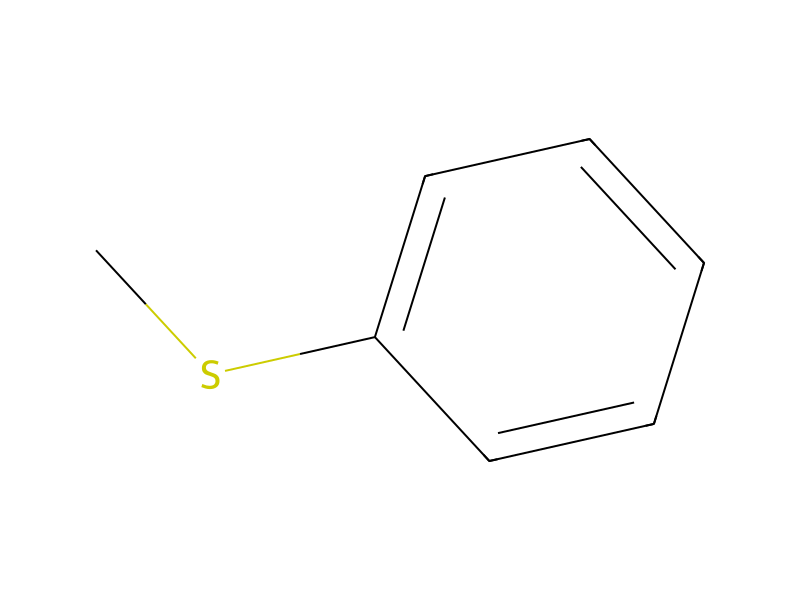
[CH3:1][C@H:2]([NH2:6])[C:3]([OH:5])=[O:4].C(OC([NH:17][CH2:18][CH2:19][CH2:20][CH2:21][C@@H:22]([C:24]([OH:26])=[O:25])[NH2:23])=O)C1C=CC=CC=1.FC(F)(F)C(O)=O.C1(SC)C=CC=CC=1.C(N[C@H](C(OC(=O)[C@H](CCCCNC(OCC1C=CC=CC=1)=O)NC(O)=O)=O)CCCCNC(OCC1C=CC=CC=1)=O)(O)=O>>[CH3:1][C@H:2]([NH2:6])[C:3]([OH:5])=[O:4].[NH2:23][C@H:22]([C:24]([OH:26])=[O:25])[CH2:21][CH2:20][CH2:19][CH2:18][NH2:17]Komponenten



Versuchsvorschrift
To the poly-L-alanine/Nε-benzyloxycarbonyl-L-lysine copolymer (9/1) obtained in Production Example 16 were added 270 equivalents and 5 equivalents of trifluoroacetic acid (manufactured by TOKYO CHEMICAL INDUSTRY CO., LTD.) and thioanisole (manufactured by TOKYO CHEMICAL INDUSTRY CO., LTD.), respectively, relative to the number of moles of N-carboxy-N′-benzyloxycarbonyl-L-lysine anhydride, and the mixture was reacted at room temperature to give a poly-L-alanine/L-lysine copolymer. This was dissolved in a dichloromethane-trifluoroacetic acid mixed solvent (50:70 (v/v)) to give a 4.4 wt % poly-L-alanine/L-lysine copolymer solution. A fiber structure made of a poly-L-alanine/L-lysine copolymer was obtained from this solution in the same manner as in Production Example 1.
Quellen und Nachweise
- ORD-Eintrag
- ord-b83c5b18197a49fb9342300b9b74c3ec
- Quelldatensatz
- uspto-grants-2015_11
- Patentnummer
- US09192624B2
Notizen zur Reaktion
Wird geladen…