L-Hydroxyproline → 4-Hydroxy-1-(4-nitrophenyl)pyrrolidine-2-carboxylic acid
Reaction equation

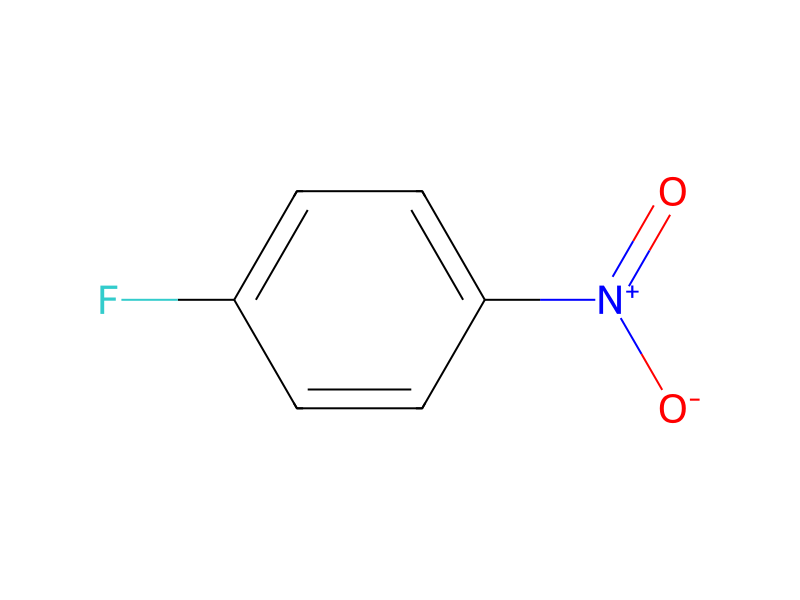
F[C:2]1[CH:7]=[CH:6][C:5]([N+:8]([O-:10])=[O:9])=[CH:4][CH:3]=1.C(=O)([O-])[O-].[K+].[K+].[OH:17][C@H:18]1[CH2:22][NH:21][C@H:20]([C:23]([OH:25])=[O:24])[CH2:19]1>O>[OH:17][CH:18]1[CH2:22][N:21]([C:2]2[CH:7]=[CH:6][C:5]([N+:8]([O-:10])=[O:9])=[CH:4][CH:3]=2)[CH:20]([C:23]([OH:25])=[O:24])[CH2:19]1Participants
5
Reactant 3


Product 1

Reagents, catalysts & solvents 1

Procedure
10 g (70.9 mmol) of 4-fluoronitrobenzene, 11.75 g (85 mmol) of potassium carbonate and 9.3 g (70.8 mmol) of trans-4-hydroxyproline were stirred in 100 ml of distilled water. The mixture was refluxed for 16 hours and was then cooled to room temperature. The product was extracted with ethyl acetate. The organic phases were washed with a saturated solution, dried over sodium sulphate and concentrated under reduced pressure. The oil obtained was crystallized from an ethyl acetate/heptane mixture. A yellow powder was obtained.
Workup
- temperatureThe mixture was refluxed for 16 hours
- extractionThe product was extracted with ethyl acetate
- washThe organic phases were washed with a saturated solution
- dry with materialdried over sodium sulphate
- concentrationconcentrated under reduced pressure
- customThe oil obtained
- customwas crystallized from an ethyl acetate/heptane mixture
- customA yellow powder was obtained
Sources & evidence
- ORD record
- ord-16dbd8d3185e4f769d97466d0c90dbad
- Source dataset
- uspto-grants-2006_11
- Patent number
- US07132543B2
Reaction notes
Loading…