Acetanilide → HCID 15151164, compound
Reaction equation

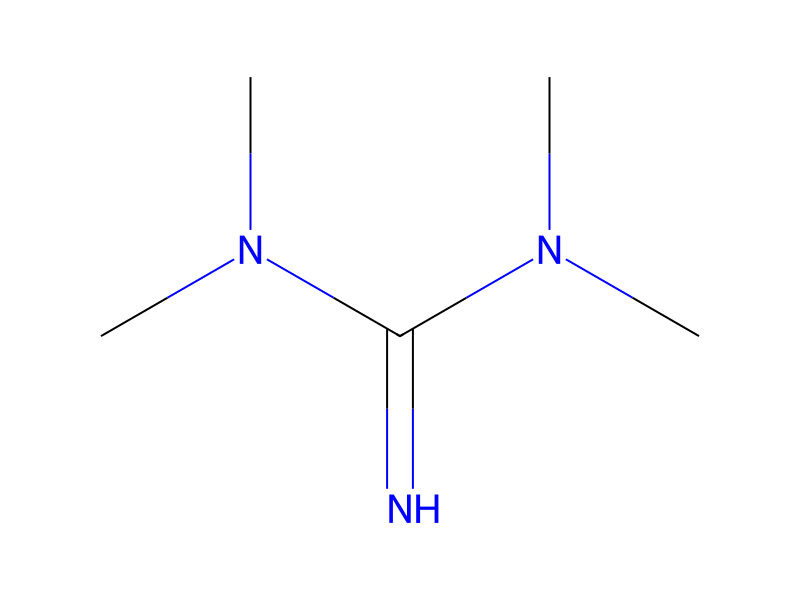
C([NH:4][C:5]1[CH:10]=[CH:9][CH:8]=[CH:7][CH:6]=1)(=O)C.[C:11]1([C:17]#[CH:18])[CH:16]=[CH:15][CH:14]=[CH:13][CH:12]=1.[CH3:19][CH2:20][O:21][C:22](C)=[O:23]>O1CCOCC1.CN(C)C(=N)N(C)C.CCCCCC.Cl[Pd](Cl)([P](C1C=CC=CC=1)(C1C=CC=CC=1)C1C=CC=CC=1)[P](C1C=CC=CC=1)(C1C=CC=CC=1)C1C=CC=CC=1.[Cu]I>[C:11]1([C:17]2[NH:4][C:5]3[C:6]([CH:18]=2)=[CH:7][C:8]([C:22]([O:21][CH2:20][CH3:19])=[O:23])=[CH:9][CH:10]=3)[CH:16]=[CH:15][CH:14]=[CH:13][CH:12]=1Participants
9
Reactant 3



Product 1

Reagents, catalysts & solvents 5




Procedure
Following the procedure of A. Bedeschi et al. (Tet. Lett. 1997, 38, 2307), the acetanilide derivative from above (0.900 g, 2.7 mmol) was reacted with phenylacetylene (0.385 mL, 3.5 mmol, 1.3 equivalent) in the presence of PdCl2(PPh3)2 (10 mole %) and CuI (10 mole %) in a mixture of dioxane (5 mL) and tetramethylguanidine (5 mL). The desired 2-phenylindole (0.589 g, 82% yield) was isolated as a yellow solid after flash chromatography with 15% EtOAc in hexane.
Sources & evidence
- ORD record
- ord-0bb3e91adf5549b98cb0942706b61ce5
- Source dataset
- uspto-grants-2006_11
- Patent number
- US07141574B2
Reaction notes
Loading…