Dicyclohexylcarbodiimide → HCID 131726110, compound
Reaction equation

[Br:1][CH:2]([CH3:6])C(O)=O.C1CCC(N=[C:14]=[N:15][CH:16]2[CH2:21][CH2:20][CH2:19][CH2:18][CH2:17]2)CC1.N[AsH:23](=[O:30])C1C=CC=CC=1.Cl.CC[O:34]CC>ClCCl.CN(C=O)C.C(N(CC)CC)C>[Br:1][CH2:2][CH2:6][C:14]([NH:15][C:16]1[CH:17]=[CH:18][C:19]([AsH2:23]=[O:30])=[CH:20][CH:21]=1)=[O:34]Participants
Reactant 4

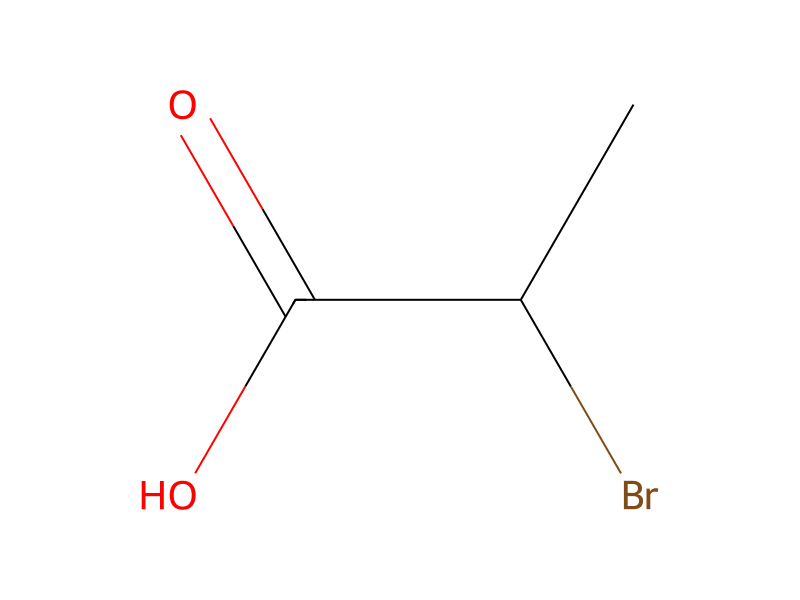


Product 1

Reagents, catalysts & solvents 3



Procedure
Bromopropionic acid anhydride [formed by reacting bromopropionic acid (1.66 g, 10.86 mmol) with DCC (1.12 g, 5.43 mmol) in 20 ml anhydrous dichloromethane for 15 minutes at 25° C., and filtering off the solid that precipitated] was added to a solution of aminophenylarsineoxide (1 g, 5.43 mmol, synthesized according to published protocol) in 10 ml DMF, and allowed to stir overnight. The amino phenylarsineoxide was rendered soluble by adding to it 10.86 mmol HCl/ether followed by neutralization with triethylamine and filtering the away the solid that formed. The solution was quenched with 20 ml water, and filtered to remove solids. The filtrate was evaporated to an oil, and purified via flash chromatography. In later preparations, 3-bromopropionyl chloride was used instead of the anhydride.
Workup
- customfor 15 minutes
- customat 25° C.
- filtrationfiltering off the solid
- customthat precipitated]
- filtrationfiltering the away the solid
- customthat formed
- customThe solution was quenched with 20 ml water
- filtrationfiltered
- customto remove solids
- customThe filtrate was evaporated to an oil
- custompurified via flash chromatography
Sources & evidence
- ORD record
- ord-13c03d408d394a80948533ff34f6f825
- Source dataset
- uspto-grants-2006_11
- Patent number
- US07141655B2
Reaction notes
Loading…