Trityl chloride → HCID 21880787, compound
Reaction equation

[CH3:1][NH:2][CH2:3][CH2:4][NH2:5].[C:6](Cl)([C:19]1[CH:24]=[CH:23][CH:22]=[CH:21][CH:20]=1)([C:13]1[CH:18]=[CH:17][CH:16]=[CH:15][CH:14]=1)[C:7]1[CH:12]=[CH:11][CH:10]=[CH:9][CH:8]=1>CN(C=O)C>[CH3:1][NH:2][CH2:3][CH2:4][NH:5][C:6]([C:7]1[CH:12]=[CH:11][CH:10]=[CH:9][CH:8]=1)([C:19]1[CH:20]=[CH:21][CH:22]=[CH:23][CH:24]=1)[C:13]1[CH:14]=[CH:15][CH:16]=[CH:17][CH:18]=1Participants
4
Reactant 2

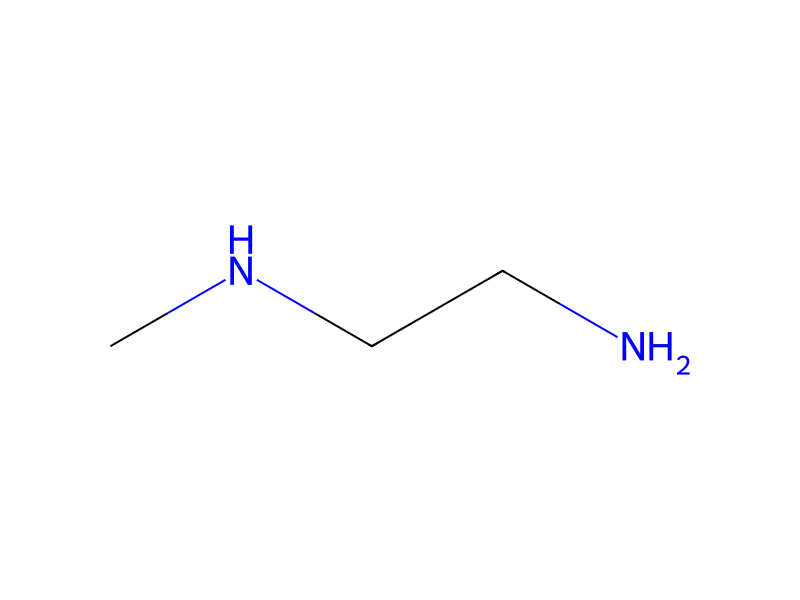
Product 1

Reagents, catalysts & solvents 1

Procedure
To a solution of 5 g (67.45 mmol) N1-methyl-ethane-1,2-diamine in 50 mL DMF a solution of 16.72 g (60 mmol) trityl-chloride in 50 mL DMF was added slowly over a period of 10 minutes at room temperature. The mixture was stirred overnight then it was evaporated to dryness, the oil was dissolved in 100 mL ethylacetate, was washed three times with water, dried with sodium sulfate then was evaporated. The components of the oil were separated on a silicagel column using chloroform-methanol gradient elution to give 2.13 g (10%) 197.). 1H-NMR (CDCl3) 7.48–7.44 (m, 6H), 7.27–7.21 (m, 6H), 7.18–7.12 (m, 3H), 3.44 (s, 1H), 2.78–2.74 (m, 2H), 2.42–2.38 (m, 5H).
Workup
- customit was evaporated to dryness
- dissolutionthe oil was dissolved in 100 mL ethylacetate
- washwas washed three times with water
- dry with materialdried with sodium sulfate
- customthen was evaporated
- customThe components of the oil were separated on a silicagel column
- washchloroform-methanol gradient elution
Sources & evidence
- ORD record
- ord-ddfbcb9fd9a644be969cbe41f9cf777f
- Source dataset
- uspto-grants-2006_11
- Patent number
- US07141680B2
Reaction notes
Loading…