Sodium hydride → HCID 178436664, compound
Reaction equation

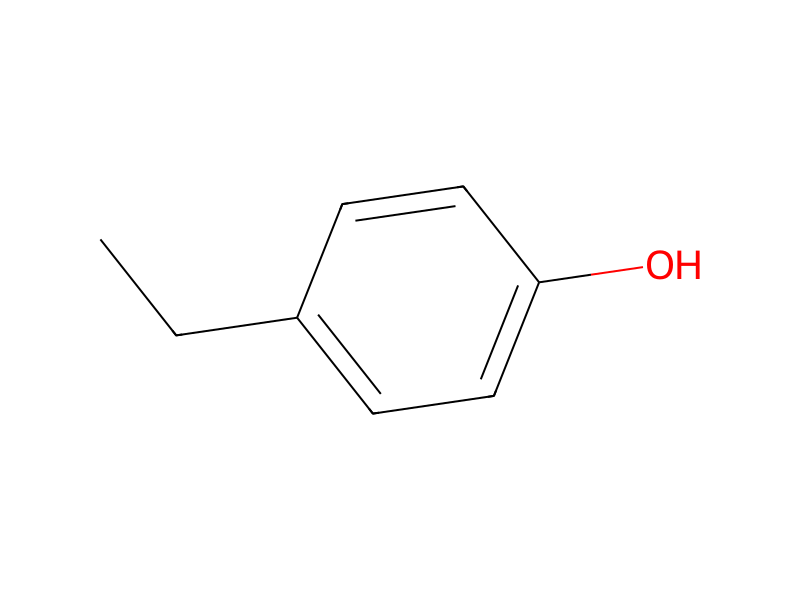
[H-].[Na+].[CH2:3]([C:5]1[CH:10]=[CH:9][C:8]([OH:11])=[CH:7][CH:6]=1)[CH3:4].Cl.Cl[CH2:14][CH2:15][C:16]1[N:17]=[CH:18][NH:19][CH:20]=1>CN(C)C=O.[I-].C([N+](CCCC)(CCCC)CCCC)CCC>[CH2:3]([C:5]1[CH:10]=[CH:9][C:8]([O:11][CH2:14][CH2:15][C:16]2[N:17]=[CH:18][NH:19][CH:20]=2)=[CH:7][CH:6]=1)[CH3:4]Participants




Procedure
180 mg (60% in oil; 4.5 mmol) of sodium hydride are slowly added to a solution of 1.1 g (9 mmol) of 4-ethylphenol in 7 ml of dimethylformamide and the mixture is stirred at room temperature for 2 hours. 150 mg (0.9 mmol) of 4-(2-chloroethyl)-1H-imidazole hydrochloride and tetrabutylammonium iodide (catalyst) are added and the mixture is stirred at 80° C. for 3 days. The solvent is concentrated and 50 ml of diethyl ether are added. The precipitate is separated by filtration and the filtrate is evaporated under reduced pressure to give a residue which is subjected to column chromatography through silica gel (first eluent ethyl acetate, second eluent 95/5 ethyl acetate/methanol). The title compound is then purified by preparative chromatography and then converted to the oxalate which, after crystallization from an ethanol/diethyl ether mixture, melts at 178° C.
Workup
- stirringthe mixture is stirred at 80° C. for 3 days
- concentrationThe solvent is concentrated
- addition50 ml of diethyl ether are added
- customThe precipitate is separated by filtration
- customthe filtrate is evaporated under reduced pressure
- customto give a residue which
- customThe title compound is then purified by preparative chromatography
- customafter crystallization from an ethanol/diethyl ether mixture, melts at 178° C.
Sources & evidence
- ORD record
- ord-d67be9537b164d3cb89a60df3a32d026
- Source dataset
- uspto-grants-1998_01
- Patent number
- US05708171
Reaction notes
Loading…