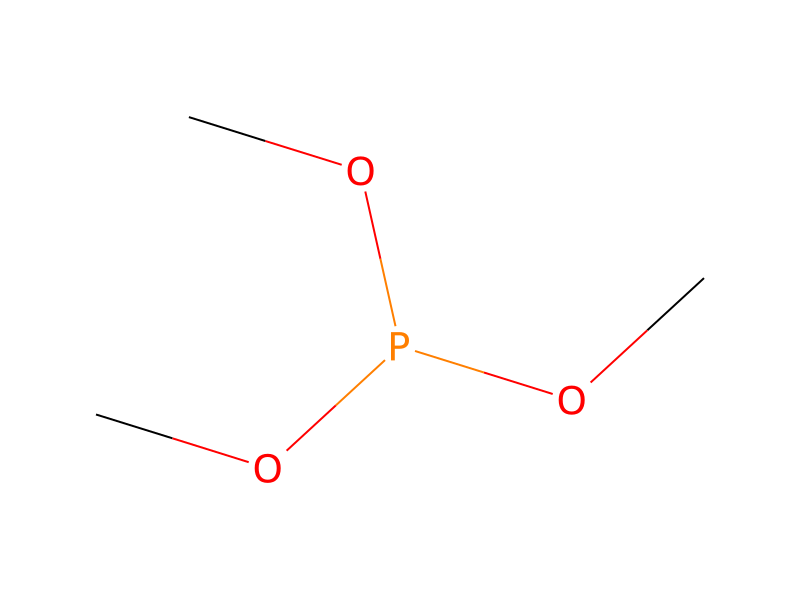
Trimethyl phosphite → 6,7-Dichloro-3-dimethylphosphonomethyl-2-bromoquinoline
Reaction equation

[Cl:1][C:2]1[CH:3]=[C:4]2[C:9](=[CH:10][C:11]=1[Cl:12])[N:8]=[C:7]([Br:13])[C:6]([CH2:14]Br)=[CH:5]2.[CH3:16][O:17][P:18]([O:21]C)[O:19][CH3:20]>>[Cl:1][C:2]1[CH:3]=[C:4]2[C:9](=[CH:10][C:11]=1[Cl:12])[N:8]=[C:7]([Br:13])[C:6]([CH2:14][P:18]([O:19][CH3:20])([O:17][CH3:16])=[O:21])=[CH:5]2Participants
3


Procedure
A mixture of 6,7-dichloro-2-bromo-3-bromomethylquinoline (0.74 g, 2 mmol) and trimethylphosphite (5 ml) was heated at 80°-90° C. for 2-3h. Then the excess trimethylphosphite was removed in vacuo at 70°-80° C. and the oily residue was made crystalline by treating with hexane-ethyl ether (1:1). The crystalls were collected, washed with toluene and dried in vacuo to give 0.65 g of 6,7-dichloro-3-dimethylphosphonomethyl-2-bromoquinoline.
Workup
- temperaturewas heated at 80°-90° C. for 2-3h
- customThen the excess trimethylphosphite was removed in vacuo at 70°-80° C.
- additionby treating with hexane-ethyl ether (1:1)
- customThe crystalls were collected
- washwashed with toluene
- customdried in vacuo
Sources & evidence
- ORD record
- ord-a0a4ca57d2c4442987f3ccc2be08b6c1
- Source dataset
- uspto-grants-1998_01
- Patent number
- US05710139
Reaction notes
Loading…