Benzoic Acid → Methyl Benzoate
Reaction equation

[CH3:1]O.[C:3]([OH:11])(=[O:10])[C:4]1[CH:9]=[CH:8][CH:7]=[CH:6][CH:5]=1>O>[C:3]([O:11][CH3:1])(=[O:10])[C:4]1[CH:9]=[CH:8][CH:7]=[CH:6][CH:5]=1Participants
Reactant 2
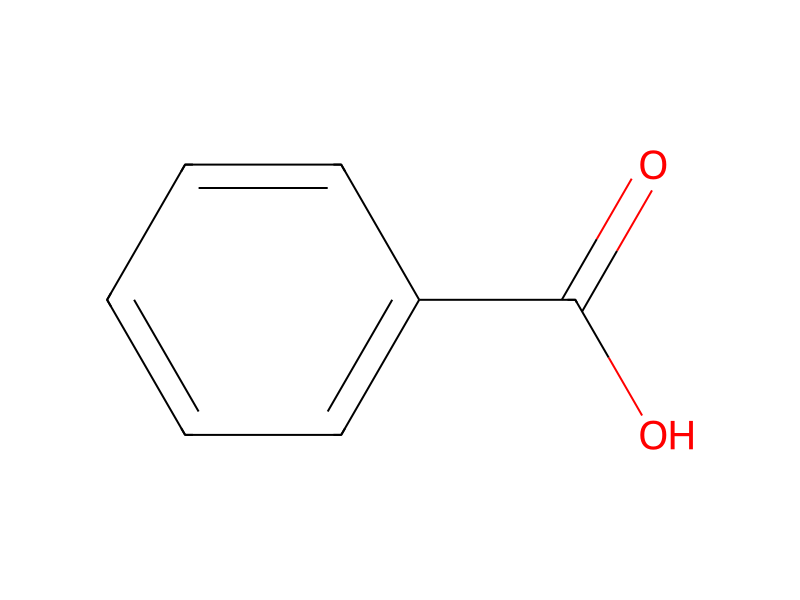

Product 1

Reagents, catalysts & solvents 1

Procedure
The acid-catalyzed condensation of alcohols to esters has been known for some time. For example, the acid-catalyzed condensation of an alcohol with a carboxylic acid is known to yield an ester and water. This is generally known as a Fischer esterification reaction. It is a reversible process and the equilibrium lies slightly to the side of the production of the products when the reactants are simple alcohols and carboxylic acids. When the reaction is used for preparative purposes, the position of the equilibrium can be made more favorable by using either the alcohol or the carboxylic acid in excess. For example, methanol (0.6 mol.) plus benzoic acid (0.1 mol.) can be reacted to form methyl benzoate (isolated in 70% yield based on benzoic acid) and water. The reaction requires the addition of heat and sulfuric acid as a catalyst. The use of other acids such as, hydrochloric acid and trifluoro acetic acid are also known.
Workup
- customThis is generally known as a Fischer esterification reaction
Sources & evidence
- ORD record
- ord-1fe3fb5a24f84759b0a850a8292c12a8
- Source dataset
- uspto-grants-1998_01
- Patent number
- US05710293
Reaction notes
Loading…