Hydrogen Peroxide → 2-Cyclohexen-1-one, 4-phenyl-
Reaction equation

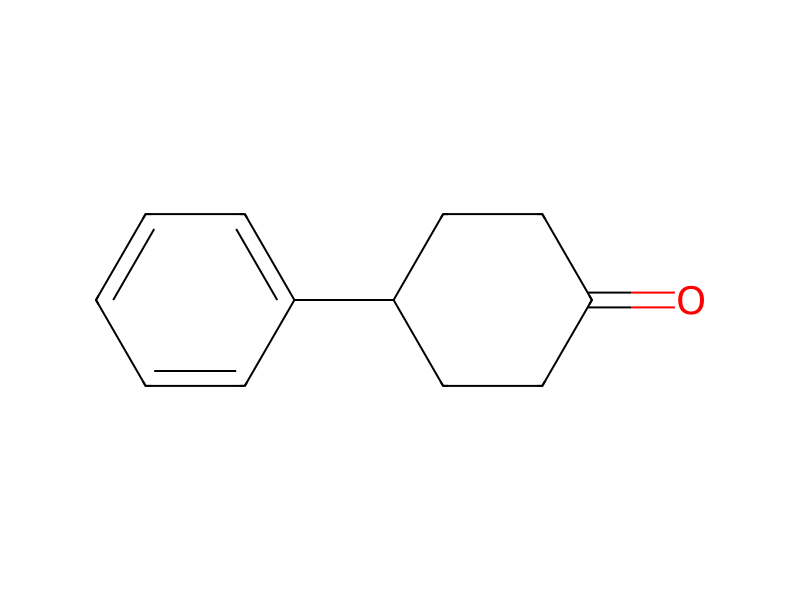
[C:1]1([CH:7]2[CH2:12][CH2:11][C:10](=[O:13])[CH2:9][CH2:8]2)[CH:6]=[CH:5][CH:4]=[CH:3][CH:2]=1.[C:14]1([Se]Cl)C=CC=CC=1.OO>>[CH3:14][CH:8]1[CH:7]([C:1]2[CH:6]=[CH:5][CH:4]=[CH:3][CH:2]=2)[CH2:12][CH2:11][C:10](=[O:13])[CH2:9]1.[C:1]1([CH:7]2[CH2:12][CH2:11][C:10](=[O:13])[CH:9]=[CH:8]2)[CH:6]=[CH:5][CH:4]=[CH:3][CH:2]=1Participants
5




Procedure
The intermediate 3-methyl-4-phenylcyclohexanone is prepared, first by the reaction of 4-phenylcyclohexanone with phenylselenenyl chloride and aqueous 30% hydrogen peroxide, yielding 4-phenyl-2-cyclohexenone, and then the reaction of the cyclohexenone with 1.4M methyllithium and aqueous ammonium chloride, affording 3-methyl-4-phenylcyclohexanone. The cyclohexanone is then reacted with cyanoguanidine as previously described. Example 15 provides a detailed description of how this reaction is conducted.
Sources & evidence
- ORD record
- ord-34f1eb1b5d4a48c482f577ea44f545e1
- Source dataset
- uspto-grants-1998_01
- Patent number
- US05712281
Reaction notes
Loading…