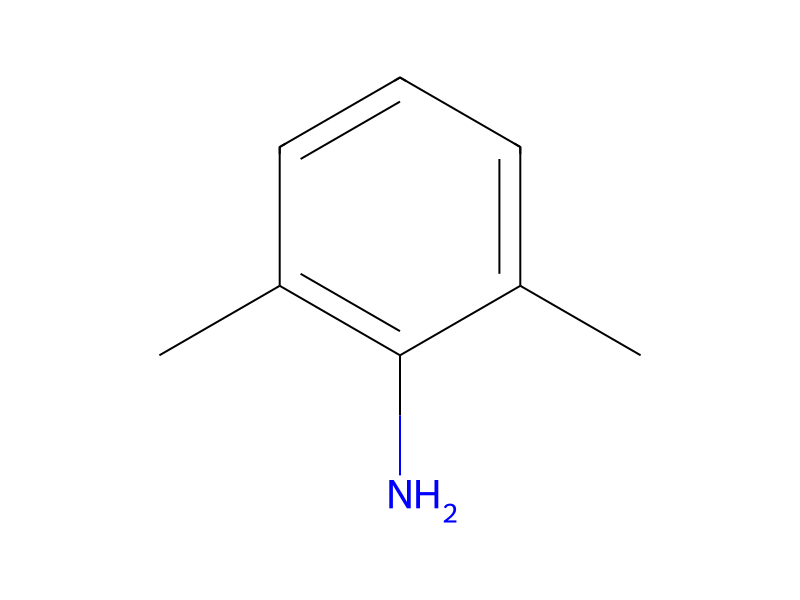
2,6-Dimethylaniline → HCID 44366397, compound
Reaction equation

Cl.[CH3:2][C:3]1[C:12]([CH2:13][CH2:14]Cl)=[C:11](Cl)[C:10]2[C:5](=[CH:6][CH:7]=[CH:8][CH:9]=2)[N:4]=1.[CH3:17][C:18]1[CH:24]=[CH:23][CH:22]=[C:21]([CH3:25])[C:19]=1[NH2:20]>CC(O)C>[CH3:17][C:18]1[CH:24]=[CH:23][CH:22]=[C:21]([CH3:25])[C:19]=1[N:20]1[C:11]2[C:10]3[CH:9]=[CH:8][CH:7]=[CH:6][C:5]=3[N:4]=[C:3]([CH3:2])[C:12]=2[CH2:13][CH2:14]1Participants
4
Reactant 2

Product 1

Reagents, catalysts & solvents 1

Procedure
A mixture of 2-methyl-3-(2-chloroethyl)-4-chloroquinoline hydrochloride (13.8 g, 50 mmol), 2,6-dimethylaniline (12.5 ml, 100 mmol) and 2-propanol (400 ml) was heated to 140° for 5 days in a pressure vessel, then cooled and evaporated. The crude product was converted to free base and chromatographed (silica gel, methanolic ammonia in dichloromethane). Recrystallisation from aqueous methanol followed by aqueous ethanol gave 1-(2,6-dimethylphenyl)-4-methyl- 2,3-dihydropyrrolo[3,2-c]quinoline (1.52 g), m.p. 149°-152°.
Workup
- temperaturewas heated to 140° for 5 days in a pressure vessel
- temperaturecooled
- customevaporated
- customchromatographed (silica gel, methanolic ammonia in dichloromethane)
- customRecrystallisation from aqueous methanol
Sources & evidence
- ORD record
- ord-29436ab7d0c64ec1a7f2983220eb89e9
- Source dataset
- uspto-grants-1991_09
- Patent number
- US05051508
Reaction notes
Loading…