Potassium Carbonate → HCID 68815874, compound
Reaction equation

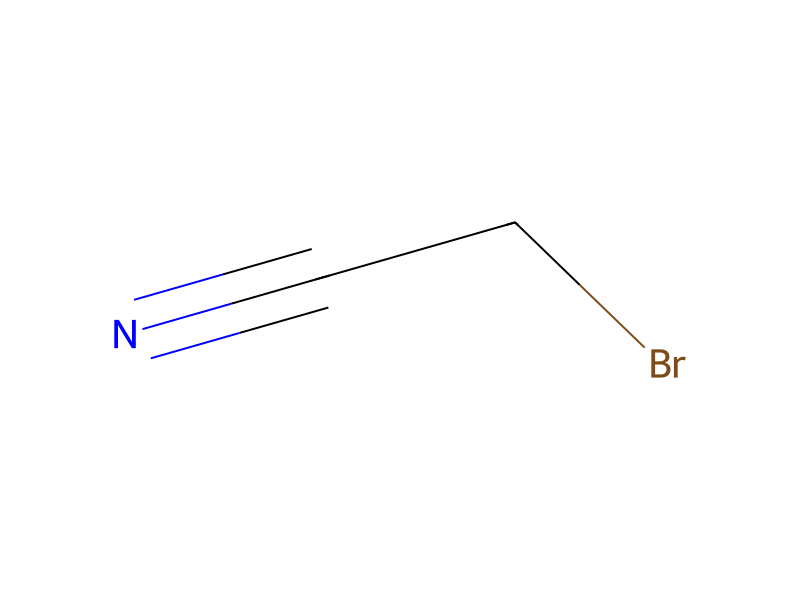
[CH3:1][N:2]1[C:10]2[C:5](=[CH:6][C:7]([C:11]3[CH:16]=[CH:15][C:14]([OH:17])=[CH:13][CH:12]=3)=[CH:8][CH:9]=2)[C:4]([CH2:18][CH2:19][CH2:20][CH2:21][CH3:22])=[C:3]1[C:23]1[CH:28]=[CH:27][CH:26]=[CH:25][CH:24]=1.C([O-])([O-])=O.[K+].[K+].Br[CH2:36][C:37]#[N:38]>CC(C)=O>[CH3:1][N:2]1[C:10]2[C:5](=[CH:6][C:7]([C:11]3[CH:16]=[CH:15][C:14]([O:17][CH2:36][C:37]#[N:38])=[CH:13][CH:12]=3)=[CH:8][CH:9]=2)[C:4]([CH2:18][CH2:19][CH2:20][CH2:21][CH3:22])=[C:3]1[C:23]1[CH:24]=[CH:25][CH:26]=[CH:27][CH:28]=1Participants
5
Reactant 3


Product 1

Reagents, catalysts & solvents 1

Procedure
The desired product was prepared using a procedure similar to step 5 of example 3. Thus, 4-(1-methyl-3-pentyl-2-phenyl-1H-indol-5-yl)-phenol (0.173 g, 0.472 mmol) was reacted with K2CO3 (0.078 g, 0.566 mmol) and bromoacetonitrile (0.068 g, 0.566 mmol) in acetone (10 ml) to give the product (0.160 g, 0.392 mmol, 83%) as a white solid, mp 101-102° C. 1H NMR (DMSO-d6) δ 0.76 (t, J=7.0 Hz, 3H), 1.14-1.22 (m, 4H), 1.52-1.98 (m, 2H), 2.66 (t, J=7.5 Hz, 2H), 3.56 (s, 3H), 5.21 (s, 2H), 7.16 (d, J=8.9 Hz, 2H), 7.43-7.51 (m, 5H), 7.55 (t, J=7.2 Hz, 2H), 7.69 (d, J=8.9 Hz, 2H), 7.76 (d, J=1.1 Hz, 1H); [ESI(+)], m/z 409 (M+H)+.
Sources & evidence
- ORD record
- ord-eda2776bd09d456eaba74ec4ef71b232
- Source dataset
- uspto-grants-2009_09
- Patent number
- US07582773B2
Reaction notes
Loading…