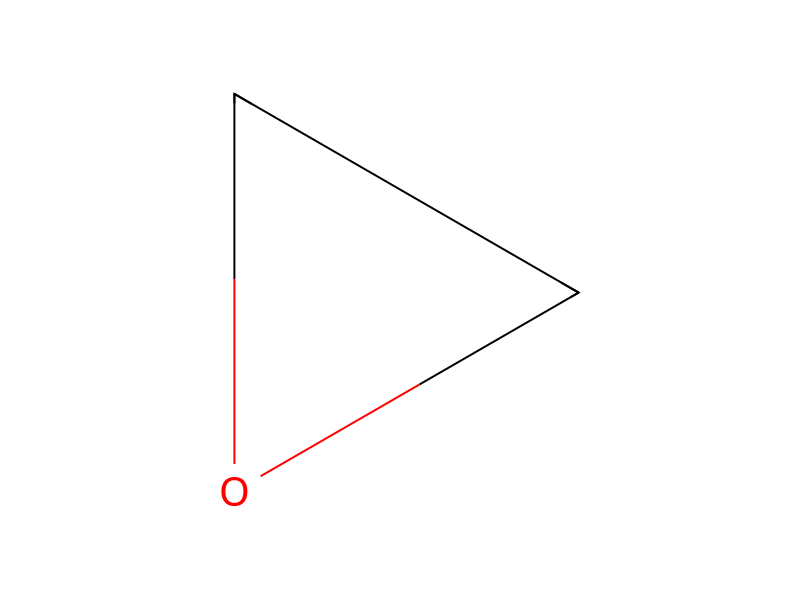
Ethylene Oxide → HCID 19426627, compound
Reaction equation

C(NC(C)C)(C)C.C([Li])CCC.CCCCCC.[CH2:19]1[CH:28]2[N:23]([CH2:24][CH2:25][CH2:26][CH2:27]2)[C:22](=[O:29])[CH2:21][CH2:20]1.[CH2:30]1[O:32][CH2:31]1.C(=O)([O-])[O-].[K+].[K+]>C1COCC1.CCOCC>[OH:32][CH2:31][CH2:30][CH:21]1[C:22](=[O:29])[N:23]2[CH:28]([CH2:27][CH2:26][CH2:25][CH2:24]2)[CH2:19][CH2:20]1Participants








Conditions
- Temperature
- -65 °C
Procedure
A stirred solution of diisopropylamine (2.25 ml, 0.016 mole) in dry THF (20 ml) at -50° C. under nitrogen was treated with 1.6M n-butyllithium in hexane (9.4 ml, 0.015 mole). After 10 minutes the solution was cooled to -65° C. and treated with a solution of quinolizidin-4-one (I. Murakoshi, Yakugaku Zasshi, 1958, 78, 594) (2.0 g, 0.013 mole) in ether (20 ml), stirred for a further 10 minutes and then ethylene oxide (1.23 g, 0.028 mole) bubbled into the solution, which was allowed to warm to room temperature over 1 hour and then heated under reflux for 1.5 hours. The reaction mixture was treated with concentrated potassium carbonate solution (30 ml) and extracted with ethyl acetate (2×60 ml). The combined extracts were dried (Na2SO4), concentrated in vacuo and the residue chromatographed on silica gel eluting with chloroform/methanol (98:2) to afford 3-(2-hydroxyethyl)quinolizidin-4-one as a pale yellow oil (1.4 g, 55%).
Workup
- temperatureto warm to room temperature over 1 hour
- temperatureheated
- temperatureunder reflux for 1.5 hours
- extractionextracted with ethyl acetate (2×60 ml)
- dry with materialThe combined extracts were dried (Na2SO4)
- concentrationconcentrated in vacuo
- customthe residue chromatographed on silica gel eluting with chloroform/methanol (98:2)
Sources & evidence
- ORD record
- ord-39e5c765a21f4424a1db13fea235112b
- Source dataset
- uspto-grants-1996_09
- Patent number
- US05552398
Reaction notes
Loading…