Potassium Carbonate → HCID 23312100, compound
Reaction equation

[CH3:1][C:2]1[CH:7]=[CH:6][CH:5]=[CH:4][C:3]=1[S:8]([C:11]1[CH:12]=[C:13]([OH:19])[C:14]([OH:18])=[CH:15][C:16]=1[CH3:17])(=[O:10])=[O:9].C(=O)([O-])[O-].[K+].[K+].Br[CH:27](Br)[C:28]([OH:30])=[O:29]>CN(C)C=O>[CH3:1][C:2]1[CH:7]=[CH:6][CH:5]=[CH:4][C:3]=1[S:8]([C:11]1[C:16]([CH3:17])=[CH:15][C:14]2[O:18][CH:27]([C:28]([OH:30])=[O:29])[O:19][C:13]=2[CH:12]=1)(=[O:10])=[O:9]Participants
5
Reactant 3

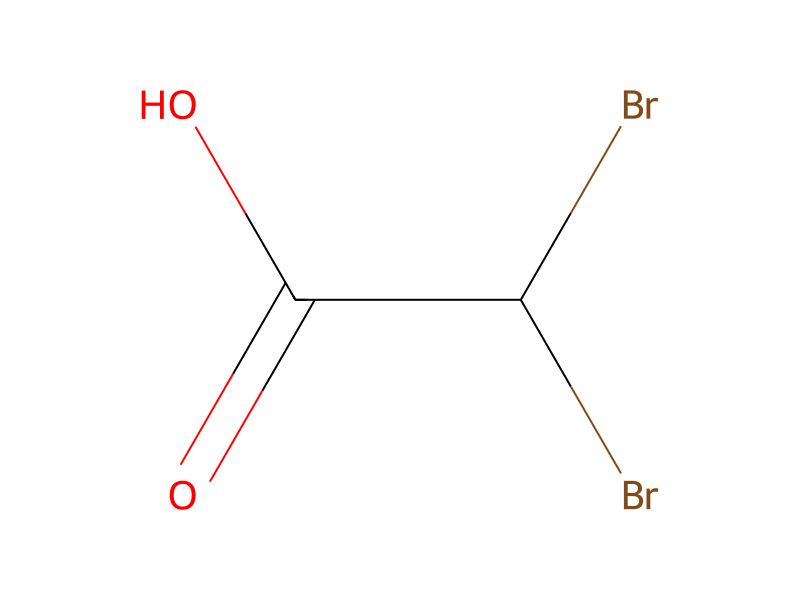

Product 1

Reagents, catalysts & solvents 1

Procedure
27.5 g (0.097 mol) of 4-(2-methylphenylsulphonyl)-5-methyl-1,2-benzenediol, 62.1 g (0.45 mol) of potassium carbonate and 32.7 g (0.145 mol) of dibromoacetic acid (97% strength) are reacted in 300 ml of dimethylformamide under an inert gas atmosphere in a manner analogous to that described in Example 27. After working up, purification by way of the ethyl ester and hydrolysis, in a manner entirely analogous to that described in Example 27, 5-(2-methylphenylsulphonyl)-6-methyl-1,3-benzodioxole-2-carboxylic acid is obtained in the form of colourless crystals having a melting point of 178°-180° (from toluene).
Workup
- custompurification
- customby way of the ethyl ester and hydrolysis
Sources & evidence
- ORD record
- ord-add19fa071e44cfb93bfff0d67b190ea
- Source dataset
- uspto-grants-1986_07
- Patent number
- US04600709
Reaction notes
Loading…